
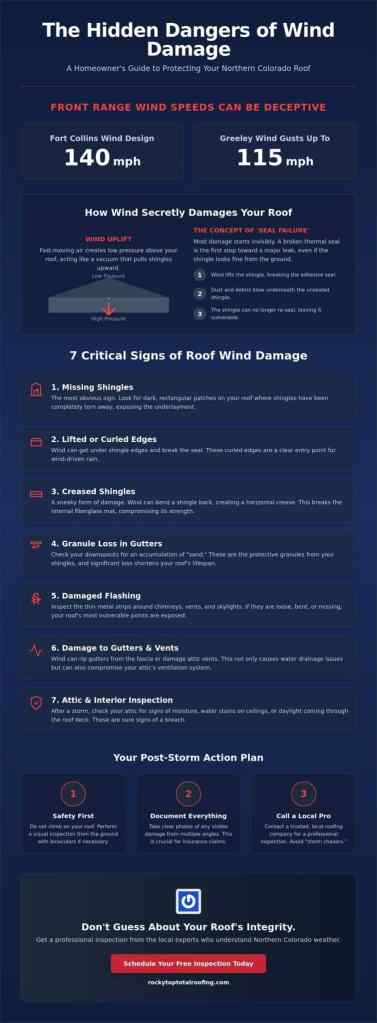
What if the most dangerous threat to your home’s safety isn’t the shingle you find lying in your yard after a storm, but the broken seals you can’t see from the driveway? In Northern Colorado, where wind design requirements in Fort Collins reach 140 mph and Greeley sees gusts up to 115 mph, wind damage is often a silent structural failure rather than an obvious catastrophe. Many homeowners look up, see that their roof looks okay, and unknowingly leave their property vulnerable to hidden leaks and mold growth. Understanding the subtle signs of roof wind damage is the first step in ensuring your home remains the sanctuary it is meant to be.
We know how stressful it is to hear the wind howling against your siding and wonder if your insurance will actually have your back or if a “storm chaser” is about to knock on your door. It is perfectly natural to feel anxious about the integrity of your roof when the Front Range weather turns volatile. In this guide, we’ll provide a clear checklist of what to look for so you can identify issues before they become expensive repairs. You’ll learn exactly when it’s time to call a professional and how to document findings for your insurance provider, giving you the peace of mind that comes from being prepared and protected.
Key Takeaways
- Discover how wind uplift creates hidden structural failures by breaking shingle seals long before you see shingles on the ground.
- Learn to identify the seven most critical signs of roof wind damage, including subtle lifting and curling that often go unnoticed during a casual glance.
- Understand why inspecting your gutters and attic vents is just as vital as checking your shingles for maintaining a weather-tight home.
- Master a safe documentation strategy to capture the right evidence for insurance claims immediately following a Front Range storm.
- Find out why adhering to specific Northern Colorado building codes and hiring local craftsmen is your best defense against predatory storm chasers.
The Physics of Wind Damage: How Front Range Storms Impact Your Roof
Understanding The Physics of Wind Damage is essential for every homeowner along the Front Range. While we don’t face coastal hurricanes, our local gusts often mimic their destructive power through a process called wind uplift. This happens when air moves rapidly over your roof, creating a pressure differential. The lower pressure above the roof surface acts like a vacuum, literally pulling the shingles upward from the edges. It is a subtle but powerful force that can compromise your home’s integrity in a single afternoon.
This force usually concentrates on the most vulnerable areas: the corners and ridges. It is much like trying to peel a sticker off a surface; once the edge is lifted, the rest follows with much less effort. In towns like Loveland and Greeley, we frequently see this “peeling” effect after major storm events. Because our building codes must account for wind speeds of 130 mph in Loveland and 115 mph in Greeley, the sheer volume of air moving across your roof is significant enough to tear through standard materials if they aren’t properly maintained.
Colorado’s high altitude adds another layer of complexity to how we identify signs of roof wind damage. At a mile high, the air is thinner and the shingles become more brittle over time. When a shingle loses its flexibility, it can’t “give” with the wind. Instead of bending, it snaps or cracks. This makes the inspection process difficult because the damage might look like a clean break rather than a traditional tear. We also deal with two distinct types of wind: straight-line winds that blow consistently for hours, and microbursts that deliver sudden, violent downward and outward pressure. Both are capable of compromising even a well-installed roof.
Why Northern Colorado Roofs Are at Higher Risk
Our famous Chinook winds are notorious for sudden pressure changes that test the limits of residential roofing. Beyond the wind itself, our intense Front Range UV exposure is a silent culprit. The sun’s rays break down the chemical bonds in asphalt shingles, weakening the adhesive strips that keep them anchored. When you combine this with our rapid temperature swings, where a 50-degree drop in a single afternoon is common, the constant contraction and expansion eventually cause those critical seals to fail. This leaves the roof wide open for the next big gust to catch a loose edge.
The Concept of ‘Seal Failure’
A shingle doesn’t have to be missing to be considered damaged. In fact, most signs of roof wind damage start with a broken thermal seal. Once the wind lifts a shingle enough to break its bond, it allows fine Colorado dust and debris to blow underneath the material. This layer of grit prevents the shingle from ever re-sealing on its own, even after the wind dies down. You might not see the problem from the ground, but the protection is gone. Unsealed shingles are the primary precursor to leaks because they allow water to be driven upward under the roofing material by the next gust of wind.
7 Critical Signs of Roof Wind Damage to Watch For
Identifying signs of roof wind damage requires a keen eye for both the obvious and the invisible. While a missing shingle is easy to spot, many homeowners overlook the structural compromises that happen during a high-wind event. When you walk your property after a storm, keep these seven indicators in mind to ensure your home’s first line of defense remains intact.
- Missing Shingles: This is the most visible sign. If you notice dark, rectangular patches on your roof, the shingle has been torn away, leaving the underlayment or wood decking exposed to the elements.
- Lifted or Curled Edges: Wind often gets under the edge of a shingle, breaking the adhesive bond. Even if the shingle stays on the roof, these curled edges allow water to blow underneath during the next rain.
- Creased Shingles: This is a sneaky form of damage. High winds can flip a shingle tab up, creating a horizontal crack or crease across the top, before it snaps back into place. It might look normal from the ground, but the internal fiberglass mat is broken.
- Granule Loss in Gutters: Look at your downspouts. If you see an unusual amount of “sand” or granules, it means the wind has scoured the protective surface off your shingles, shortening their lifespan.
- Damaged Flashing: High-pressure gusts can pull the metal seals away from your chimney, vents, or dormers. This creates a direct path for water to enter your attic.
- Torn Sealant: Look at the edges of the roof. If the sealant looks ragged or pulled away, the wind has compromised the perimeter protection.
- Exposed Nails: When shingles are lifted and shifted, nails can become exposed or pulled through the material, creating “nail pops” that are immediate leak risks.
Spotting Damage from the Ground
You don’t need to climb a ladder to perform an initial check. Grab a pair of binoculars and scan your roofline from the sidewalk. Look for “chatter marks,” which are thin horizontal lines where shingles have been flapping against each other. You should also watch for “bruising,” which appears as dark spots where wind-blown debris like small branches may have impacted the surface. This proactive approach to Northern Colorado Roof Restoration helps you catch issues before they turn into indoor leaks.
Signs in Your Yard and Perimeter
Sometimes the best evidence of damage is on the grass rather than the roof. Walk your yard to look for shingle “tabs” or full pieces of asphalt that have been tossed by the wind. Check your fascia and soffit boards; if they look loose or out of alignment, the wind has likely exerted significant pressure on your eaves. If you find yourself worried about what you see, a professional roof repair inspection can provide the clarity you need to move forward with confidence.
Beyond Shingles: Checking Gutters, Flashing, and Your Attic
While most homeowners focus on the asphalt surface, the most dangerous signs of roof wind damage often hide in the support systems that keep your home dry. High-velocity gusts don’t just lift shingles; they exert immense pressure on every protruding element of your roofline. If you’ve heard an unusual whistling or a rhythmic rattling during a Front Range storm, your roof is trying to tell you something. These sounds often indicate that metal components like flashing or ridge vents have been loosened, creating small gaps that act like a flute as the wind passes over them. Ignoring these auditory warnings can lead to structural compromises that are far more expensive than a simple shingle replacement.
A truly thorough roof inspection must include a detailed assessment of your gutter system and the metal flashing around chimneys and vents. Flashing is the thin metal installed to bridge gaps in your roof’s architecture. Wind can catch the edge of these metal sheets, bending them just enough to break the waterproof seal. Because these areas are designed to handle heavy water flow, even a tiny gap created by a 100 mph gust can lead to significant interior damage during the next spring downpour. Checking these components is a vital part of maintaining the longevity of your property.
Gutter Detachment and Drainage Issues
Gutters are particularly vulnerable because they act like a sail during high-wind events. When wind gets behind the gutter trough, it creates a leverage effect that can pull spikes right out of the fascia board. Even a half-inch of movement can ruin the drainage pitch, leading to water pooling against your foundation or overflowing behind the siding. If your system looks uneven or pulls away from the roofline, professional Gutter Installation Fort Collins can restore that critical protection. Seamless systems are especially helpful in our climate because they offer fewer catch points for high-velocity winds to grab and pull.
Attic Inspections: Finding the Hidden Leak
After the wind dies down, your attic provides the truest testimony of your roof’s health. Wind-driven rain is a unique threat in Northern Colorado. It doesn’t fall straight down; it is pushed horizontally at high speeds, forcing moisture through ridge vents or under damaged flashing that would normally be watertight. When you go upstairs, look for “daylight” peeking through the roof deck, which is a clear sign that a shingle or piece of flashing is missing. Check the rafters for dark staining or feel the insulation for dampness. These subtle clues are often the only warnings you’ll get before a hidden leak turns into a costly mold problem. Displaced ridge vents are another common culprit, as they can be shifted by gusts, allowing snow and rain to enter the peak of your home.
Post-Storm Action Plan: Documenting Damage and Insurance
The moments following a severe Front Range storm are what we call the “Golden Hour” for documentation. While your first instinct might be to breathe a sigh of relief that the wind has died down, this is the most critical time to gather evidence before the elements or temporary repairs obscure the signs of roof wind damage. Insurance carriers increasingly use satellite imagery and AI to pre-screen properties in 2026, so having your own clear, ground-level documentation is your strongest asset. You don’t need to risk your safety by climbing onto a steep or slippery roof. A smartphone camera or a set of binoculars can capture the necessary detail from the safety of your lawn.
Understanding the distinction between gradual wear and tear and sudden storm damage is vital for a successful claim. Many carriers in Colorado are shifting toward Actual Cash Value (ACV) policies for older roofs, which only cover the depreciated value rather than the full replacement cost. This makes it even more important to prove that the damage was caused by a specific wind event rather than long-term neglect. Filing your claim promptly is essential because most homeowner’s insurance policies require submission within one year of the storm date to avoid a denial based on a failure to mitigate further damage.
Creating a Damage Portfolio
Building a robust case for your insurance provider doesn’t have to be complicated. Start by taking date-stamped photos of your entire property, focusing on the yard, the roofline from all angles, and any new water spots on your interior ceilings. If you find shingle tabs or pieces of metal flashing on the grass, don’t throw them away; keep them as physical evidence of the wind’s force. This organized approach ensures that you have a comprehensive record that matches the signs of roof wind damage you’ve identified. Filing a claim without delay is the best way to prevent insurance companies from claiming the damage was caused by a lack of maintenance over time.
Navigating the Insurance Adjuster Meeting
When the insurance adjuster arrives, you shouldn’t have to face them alone. Having a seasoned professional present provides you with a technical advocate who understands the specific building codes for Greeley or Fort Collins, such as the 2021 International Residential Code requirements. Adjusters sometimes use industry terms like “marring” or “cosmetic issues” to downplay what is actually “functional damage” that compromises the roof’s lifespan. We ensure the adjuster looks beyond just the shingles to inspect the gutters and flashing, which are often overlooked during a quick walkthrough. If you need an expert eye to help document your findings, we are ready to assist with a professional roof repair assessment to ensure nothing is missed.
Northern Colorado Roof Restoration: Why Local Expertise Matters
When you’ve identified potential signs of roof wind damage, the next step is choosing a partner who understands the unique structural challenges of the Front Range. Northern Colorado isn’t just another service area for us; it’s our home. This local connection is vital because building codes in our region are among the most stringent in the country to account for our volatile weather. For example, a contractor working in Fort Collins must ensure a roof meets 140 mph wind design requirements, while Greeley requires 115 mph. A “storm chaser” from out of state often lacks this specific knowledge and might overlook critical requirements like the 2021 International Residential Code standards. By choosing a local craftsman, you ensure your home meets every safety regulation while supporting a business that will still be here to honor its workmanship long after the storm clouds clear.
Hiring a local team also protects you from the aggressive, high-pressure tactics often seen after a major hail or wind event. These “traveling” roofing companies often prioritize speed over quality, leaving homeowners with improperly sealed shingles that fail during the very next gust. We take a different approach, rooted in reliability and local pride. We believe that professional roof repair should be a transparent process that extends the overall lifespan of your roofing system rather than just providing a temporary patch. Our goal is to provide stability and protection for your family, treating every project with the meticulous attention to detail it deserves.
The Rocky Top Inspection Process
Our assessment process is designed to be thorough and entirely transparent. We don’t just glance at the shingles; we perform a comprehensive evaluation of the entire roofing system, including the gutters, flashing, and attic ventilation. We understand that home maintenance is a significant investment, which is why we only recommend a repair or replacement when it’s truly necessary for the integrity of your property. Whether you’re in Fort Collins, Loveland, or the surrounding plains, you can expect a calm, service-oriented consultation where we walk you through your options without any sales pressure. We believe in building relationships through honesty and expert craftsmanship.
Preparing Your Roof for the Next Storm
The best way to handle wind damage is to prevent it before the next Front Range storm hits. We often recommend high-wind rated shingles and improved installation techniques that exceed standard requirements, such as using Class 4 impact-resistant materials. These shingles are designed to stay anchored even when the Chinook winds are at their peak. Regular maintenance is another essential tool in your belt; catching a loose seal or a sagging gutter today prevents a minor issue from becoming a middle-of-the-night disaster. If you’re concerned about the state of your roof, don’t wait for the next gust to find the weak spots. Schedule your professional wind damage inspection with Rocky Top today and gain the peace of mind that comes with a secure, professionally maintained home.
Secure Your Home Before the Next Front Range Gust
Protecting your property along the Front Range requires more than just a quick glance at your shingles after a storm. We’ve explored how hidden seal failures and compromised gutters can lead to serious structural issues if they aren’t caught early. By staying proactive and documenting any changes immediately, you can navigate the insurance process with confidence and avoid the common pitfalls of out-of-state contractors. Keeping a close eye on your attic and roof perimeter ensures that your home’s integrity remains solid throughout our most intense weather seasons.
Correctly identifying the signs of roof wind damage is the first step toward long-term peace of mind for you and your family. As A+ Rated Local Roofing & Gutter Specialists serving Northern Colorado since 2013, we bring deep expertise in our region’s specific wind and hail patterns to every project. We’re here to act as your technical advocate and ensure your roof meets all local safety standards. Don’t leave your property’s safety to chance when the next high-wind warning is issued. Book Your Free Storm Damage Assessment with our team today. We’re ready to help you protect what matters most with the care and craftsmanship your home deserves.
Frequently Asked Questions
Is wind damage covered by standard homeowners insurance in Colorado?
Standard homeowners policies usually cover wind damage, but you must act quickly to secure your benefits. Most insurance carriers in Colorado require you to file a claim within one year of the storm date. It’s also becoming more common for carriers to move toward Actual Cash Value policies for older roofs, which only covers the depreciated value. Reviewing your specific policy details with a local professional can help clarify your coverage before the next storm hits.
How much wind is actually needed to damage a shingle roof?
While most asphalt shingles are rated for high speeds, damage can begin with gusts as low as 50 to 60 mph. In Northern Colorado, our wind design requirements are much higher, with Fort Collins reaching 140 mph and Greeley at 115 mph. These intense Front Range gusts create significant uplift pressure that can break adhesive seals, even if the shingles don’t immediately fly off the roof deck and leave the underlayment exposed.
Can I repair just the wind-damaged section of my roof or do I need a full replacement?
Partial repairs are often possible if the damage is localized to a small, specific area. However, if the wind has caused widespread seal failure across multiple slopes, a full replacement is usually the safer long-term solution for your home’s integrity. A local expert can determine if the remaining shingles have enough flexibility to bond with new materials or if the overall system has been too compromised by the pressure differentials of the storm.
What happens if I ignore minor wind damage like a single missing shingle?
Ignoring even one missing shingle leaves your underlayment and wood decking vulnerable to immediate water intrusion. Over time, this leads to wood rot, attic mold, and compromised insulation. Beyond the physical damage, insurance companies may deny future claims if they determine the primary cause was neglect or a failure to perform basic maintenance. Addressing small signs of roof wind damage early prevents these costly secondary issues from developing into a disaster.
How can I tell the difference between hail damage and wind damage?
Wind damage is characterized by lifting, creasing, or entirely missing shingles that look like they’ve been peeled back by a vacuum. In contrast, hail damage appears as dark, circular bruises or pits where the protective granules have been knocked away by impact. While both often occur during the same Front Range storm, they require different documentation strategies to ensure your insurance claim is processed accurately and fairly by your provider.
Is it safe to wait a few months after a storm to get an inspection?
It is best not to wait for an inspection. While the damage might not cause an immediate leak, broken seals allow Colorado dust and debris to collect under the shingles, preventing them from ever re-sealing on their own. Additionally, the one-year filing limit for many insurance policies means the clock is ticking from the day the storm occurred. Getting an inspection during the Golden Hour ensures you have the best evidence for your claim.
What are ‘chatter marks’ on a roof, and are they serious?
Chatter marks are thin, horizontal lines across the shingle tabs caused by the material flapping violently against the layer beneath it during a storm. These marks are a serious sign that the thermal seal has been broken and the shingle’s structural mat is compromised. Even if the shingle looks like it’s laying flat now, it’s no longer bonded. This leaves your home vulnerable to wind-driven rain and makes the shingle likely to blow off later.
Why do shingles blow off even on relatively new roofs?
New shingles can blow off if the thermal seal hasn’t had enough heat and time to bond properly after the initial installation. Other common causes include high-nailing, where nails are placed above the manufacturer’s specified line, or gusts that simply exceed the local design requirements. In regions like Loveland, where winds can hit 130 mph, even a new roof can fail if the installation didn’t strictly follow the 2021 International Residential Code standards for our climate.