
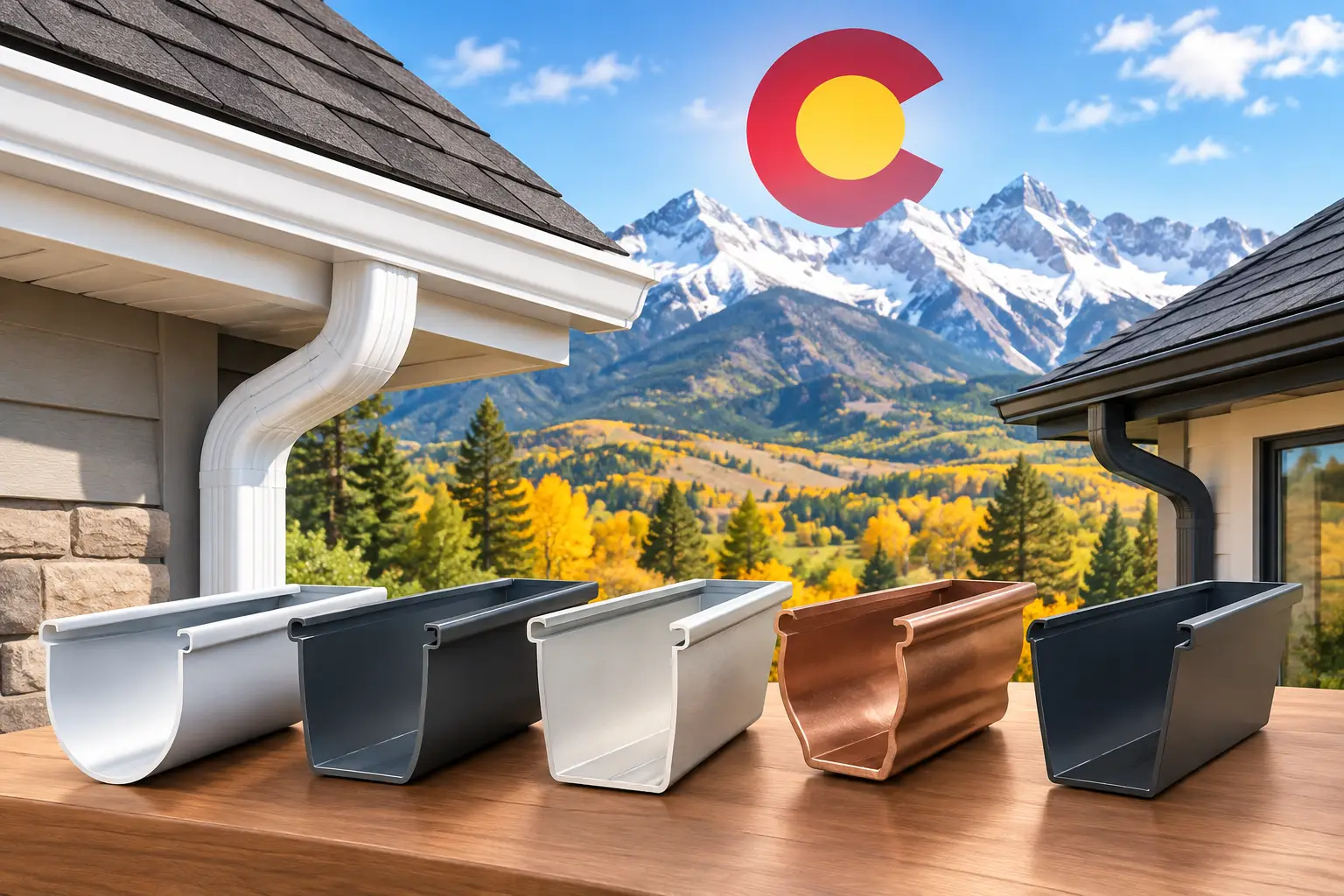
A gutter that overflows during a heavy Fort Collins rainstorm can do more than make a mess at the entryway. Water can wash out landscaping, soak siding, collect near the foundation, and create ice hazards when temperatures drop. The best gutter styles for homes are the ones that fit the roofline, move water quickly, and stand up to Northern Colorado weather without becoming a constant maintenance project.
For most homeowners, the right answer is not the most decorative option or the biggest gutter available. It is a system sized correctly for the roof, installed with proper slope and downspout placement, and built from material that can handle sun, snow, wind, and hail.
K-Style Gutters: The Most Practical Choice for Most Homes
K-style gutters are the familiar, flat-backed gutters seen on many newer and traditional homes. Their front edge has a molded profile that resembles crown molding, so they blend neatly with a variety of rooflines and exterior styles.
Their biggest advantage is capacity. A 5-inch K-style gutter generally carries more water than a similarly sized half-round gutter, which makes it a dependable fit for many homes with asphalt shingle roofs. The flat back also allows it to attach securely along the fascia board.
For a typical Northern Colorado home, seamless 5-inch or 6-inch K-style aluminum gutters are often the practical starting point. A 6-inch system may be the better call for a large or steep roof, long gutter runs, valleys that concentrate runoff, or areas where heavy rain regularly overwhelms existing gutters.
K-style gutters do have corners and profile details where leaves and debris can collect. That is not a reason to avoid them, but it does make regular cleaning or professionally installed gutter guards worth considering. When correctly pitched and maintained, they are a strong, cost-effective option for most residential properties.
Half-Round Gutters: A Classic Look With Real Trade-Offs
Half-round gutters have a smooth, curved shape that works especially well on historic homes, custom-built houses, and properties with traditional architectural details. They offer a clean, finished appearance that many homeowners prefer over the more common K-style profile.
The smooth interior is a practical benefit, too. Leaves and small debris tend to move through a half-round gutter more easily than through a gutter with sharp interior angles. However, half-round gutters usually hold less water than K-style gutters of the same width. They may need to be upsized or paired with additional downspouts when serving a broad roof area.
Installation can also cost more because half-round systems often use visible brackets and specialty fittings. That cost can be well worth it when appearance is a priority, but homeowners should not choose this style on looks alone. The system still needs enough capacity for the roof and enough outlets to carry water away from the home.
Fascia Gutters: A Custom Option for the Right Roofline
Fascia gutters are designed to serve as both a gutter and a fascia board. They are typically custom formed to fit the home, creating a broad, clean line along the edge of the roof. On the right property, they can look sharp and reduce the visual bulk of a separate gutter system.
Because fascia gutters are built into the roof edge, repair work can be more involved if they are damaged or if water gets behind them. Proper installation matters a great deal. The roof edge, drip edge, flashing, and gutter all need to work together so runoff enters the gutter instead of finding its way behind the system.
This style is usually best for homeowners who want a tailored exterior look and are working with an experienced local gutter contractor. It is not automatically better than a standard seamless K-style system, but it can be an excellent choice when the roof design supports it.
Seamless vs. Sectional Gutters: The Detail That Affects Leaks
Gutter style describes the shape. Seamless and sectional describe how the gutter is made.
Sectional gutters come in pre-cut lengths that connect with seams. They can be useful for small repairs or simple projects, but every joint is a potential place for sealant to fail over time. Seasonal temperature changes, snow load, and debris can all put stress on those connections.
Seamless gutters are formed on site to match the length of each roof edge. They still have joints at corners and downspout outlets, but they eliminate many of the seams found in sectional systems. That generally means fewer opportunities for leaks and a cleaner finished appearance.
For most full gutter replacements, seamless aluminum gutters are the better long-term value. They are durable, available in colors that coordinate with siding and trim, and do not rust. Aluminum can dent from a hard ladder impact or hail, but it performs well in the changing conditions common across Northern Colorado.
The Best Gutter Styles for Homes Depend on Roof Size
A gutter can look perfectly fine and still be undersized. This is one of the most common reasons homeowners see water spilling over the edge during a storm.
Roof pitch matters because steeper roofs shed water faster. Valleys matter because they funnel runoff from two roof planes into one concentrated area. Long runs, upper roofs draining onto lower roofs, and wide roof surfaces can all demand more gutter capacity. In many cases, the solution is not changing the entire gutter style. It may be moving a downspout, adding another downspout, installing a wider gutter, or using larger downspout outlets.
Downspouts deserve just as much attention as gutters. Even a properly sized 6-inch gutter cannot perform well if a small or poorly placed downspout restricts drainage. Water should discharge far enough from the foundation that it does not return toward the house. Extensions, splash blocks, and proper grading can all help direct it away.
Material Choices That Make Sense in Northern Colorado
Aluminum is the most common residential gutter material for good reason. It is lightweight, corrosion resistant, affordable, and available in many colors. For most homes, it offers the best balance of performance and cost.
Steel gutters are stronger against dents but require a durable coating to resist rust. They can be a reasonable choice in some situations, though they are heavier and often require more attention over time. Copper gutters offer a distinctive appearance and long service life, but they come with a premium price and are usually chosen for high-end or historic homes.
Vinyl gutters are inexpensive and easy to find, but they are rarely the best long-term choice for local weather. Strong sun, cold temperatures, and seasonal movement can make vinyl brittle or cause joints to separate. A lower upfront price can turn into repeated repairs sooner than expected.
Do Gutter Guards Work With Every Style?
Gutter guards can reduce cleaning needs, but they are not a substitute for proper gutter sizing, slope, and installation. A guard that blocks leaves but slows heavy runoff is not doing the job. The right guard should allow water into the gutter while keeping out the debris most common around the property.
Homes near mature trees may benefit significantly from gutter guards, particularly with K-style systems where debris can settle in corners. Homes with little tree cover may simply need seasonal cleaning and inspections. The roof’s condition also matters. Granules from aging shingles can collect in gutters and should be addressed before they restrict drainage.
When to Replace Instead of Repair
A loose hanger, a leaking corner, or a damaged downspout can often be repaired. But frequent overflows, recurring leaks at multiple seams, rust, sagging runs, or water stains behind the gutter may point to a larger system problem. Replacing a failing gutter with the same undersized layout only repeats the issue.
A professional inspection can identify whether the trouble comes from gutter size, poor pitch, roof runoff patterns, damaged fascia, or drainage at ground level. Rocky Top Total Roofing helps homeowners evaluate the full system so the recommendation fits the home rather than relying on a one-size-fits-all answer.
The best choice is usually a seamless aluminum system designed for the actual roof, not just the visible edge of it. When gutters are sized correctly and water is directed safely away from the foundation, they quietly protect the parts of your home that are expensive to repair.