
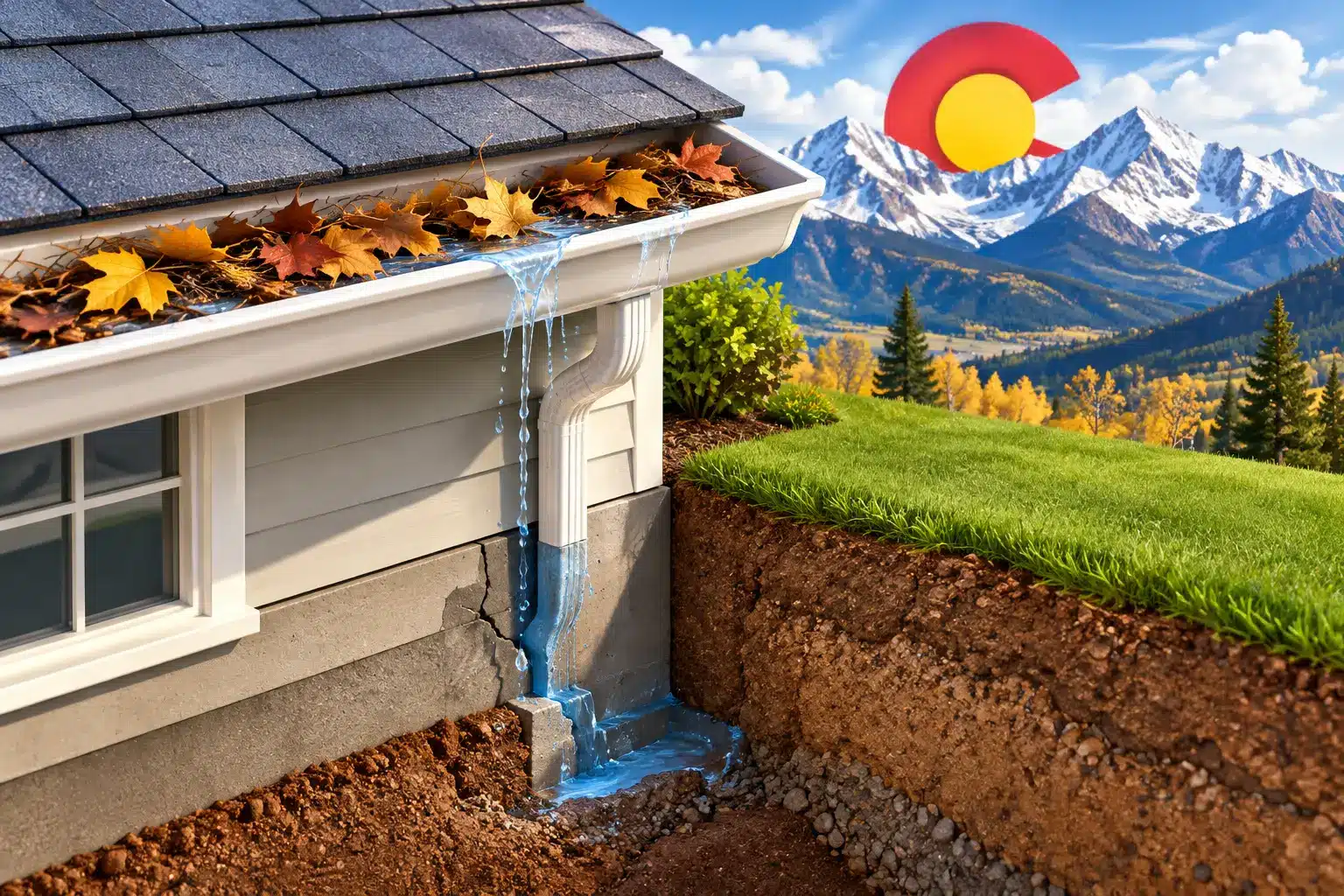
A gutter full of leaves may look like a small maintenance problem, but the water has to go somewhere. So, can clogged gutters damage foundation? Yes. When gutters overflow near the house, repeated moisture can saturate the soil around the foundation, raise the risk of water intrusion, and create costly issues that often start out of sight.
For Northern Colorado homeowners, this risk can increase during heavy rain, rapid snowmelt, and freeze-thaw weather. A working gutter system is not just there to keep water off the roofline. It is meant to collect runoff and move it safely away from your home.
How Clogged Gutters Put Water Near the Foundation
Clean gutters catch rainwater and direct it into downspouts. The downspouts then carry that water away from the home. When gutters are blocked by leaves, pine needles, granules from an aging roof, or debris from a storm, water can spill over the front or back edge of the gutter.
That overflow often lands directly beside the foundation wall. One rainfall may not cause a problem. The concern is repeated exposure over weeks, months, or several seasons. Soil near the house can become overly saturated, especially where the ground already slopes toward the structure or where downspouts release water too close to the wall.
Clogs can also hold standing water inside the gutter. The added weight may cause sections to sag, pull loose from the fascia, or lose the slope needed to drain properly. At that point, even a gutter that appears mostly clear may no longer move water where it needs to go.
What Foundation Damage Can Look Like
Water alone does not automatically mean a foundation will crack. Foundation conditions depend on soil type, drainage, the age of the home, landscaping, and prior moisture issues. Still, excess water near the foundation creates conditions that can lead to trouble.
Saturated soil can put added pressure against foundation walls. Water can also find its way through small gaps, joints, or existing cracks, leading to damp basement walls, musty odors, or moisture in a crawl space. During cold weather, moisture in the soil can freeze and expand. As it thaws, the soil shifts again. That ongoing movement can affect areas that are already vulnerable.
Some homes experience uneven settling when the moisture level around the foundation changes dramatically. You may notice new hairline cracks in interior drywall, sticking doors or windows, gaps around trim, or cracks in masonry. These signs do not always point to a foundation problem, but they are worth taking seriously when they appear alongside overflowing gutters or poor drainage.
The most expensive part of gutter neglect is that the damage may spread. Water that regularly spills over the gutter can stain siding, rot fascia boards, damage landscaping, and work its way toward the basement or foundation. Addressing the gutter problem early is usually far more manageable than waiting for indoor moisture or structural concerns to appear.
Warning Signs Your Gutters Are Sending Water the Wrong Way
You do not need to wait for a basement leak to inspect your drainage. Watch your gutters during or shortly after a steady rain. Water pouring over the gutter edge, dripping behind the gutter, or running down the siding means the system is not doing its job.
Other warning signs include soil erosion or mulch washed away near the home, puddles that remain beside the foundation, and downspouts that empty within a foot or two of the wall. Pay attention to gutters that sag, pull away from the roofline, or have plants growing from them. Those are clear signs of standing debris and restricted drainage.
Inside the home, a damp or musty smell near the basement, water staining on lower walls, peeling paint, or visible moisture after storms deserves prompt attention. The source may be a gutter issue, a grading concern, or another drainage problem. A careful inspection helps separate a simple repair from a larger water-management issue.
Check the Downspouts, Too
A clear gutter cannot protect the foundation if the downspout is blocked, disconnected, or too short. Downspouts should direct water away from the home onto ground that slopes away from the foundation. Extensions can help where discharge lands too close to the house.
The right distance varies with the property’s slope and drainage layout, but water should not be allowed to pool near the foundation. If an extension causes water to collect elsewhere in the yard or near a walkway, the drainage plan may need a more thoughtful adjustment.
Can Clogged Gutters Damage Foundation in Every Home?
Not every clogged gutter leads to foundation damage. A home with well-draining soil, effective grading, wide roof overhangs, and a short-lived clog may avoid serious consequences. On the other hand, a house with a basement, a low area beside the foundation, compacted soil, or long downspouts that discharge poorly has less room for error.
Weather matters as well. Fort Collins and the surrounding area can see intense summer storms, snow accumulation, and quick temperature swings. Debris buildup before a strong storm can send a surprising amount of roof runoff over one section of gutter. Ice can add another problem by blocking drainage and putting extra weight on the system.
The practical takeaway is simple: do not assume the issue is minor because there is no visible leak indoors. Gutters are part of the home’s exterior drainage system, and small failures can create bigger concerns over time.
Preventing Water From Reaching the Foundation
Regular gutter cleaning is the first line of defense. Most homes benefit from cleaning at least twice a year, commonly in spring and fall. Properties with mature trees, pine needles, or frequent windblown debris may need more attention. After hail, high winds, or a major storm, it is smart to check for loose sections, hidden debris, and downspouts that have shifted or disconnected.
A good maintenance visit should look beyond the debris inside the trough. Gutters need proper pitch so water flows toward the downspouts. Hangers need to hold the system securely. Seams, end caps, and downspout connections should be checked for leaks. If water is getting behind the gutter, the fascia and roof edge should also be inspected for damage.
Gutter guards can be a worthwhile option for many homeowners, particularly where leaves and needles regularly collect. They reduce the amount of debris that enters the gutter, but they are not a maintenance-free promise. Fine debris can still settle on top of some guards, and the system should still be checked after storms. The best guard is one that fits the existing gutter system, roofline, and type of debris around the property.
Just as important, look at the ground below the downspouts. Keep soil and landscaping graded so water moves away from the home. Avoid building up mulch or decorative rock so high that it traps water against the foundation or covers siding and drainage points.
When a Gutter Repair Is the Better Choice
Cleaning is enough when the gutters are sound and the problem is limited to debris. Repair or replacement becomes the better option when gutters are bent, leaking at several seams, pulling away from the fascia, undersized for the roof area, or repeatedly overflowing despite being clean.
A professional inspection can identify whether the issue is a clog, improper slope, damaged hangers, poor downspout placement, or water getting behind the gutter at the roof edge. That matters because replacing a section without correcting the drainage path may leave the original foundation risk in place.
Rocky Top Total Roofing helps homeowners address gutter problems with straightforward inspections, durable repair options, and clear recommendations. If you have seen overflow, pooling water, or a gutter pulling loose after a storm, schedule an inspection before the next round of rain or snowmelt sends more water toward your foundation.
A clean, properly pitched gutter system is one of the simplest ways to protect the ground around your home. Taking care of it now can spare you the stress of discovering water where it never should have been.