
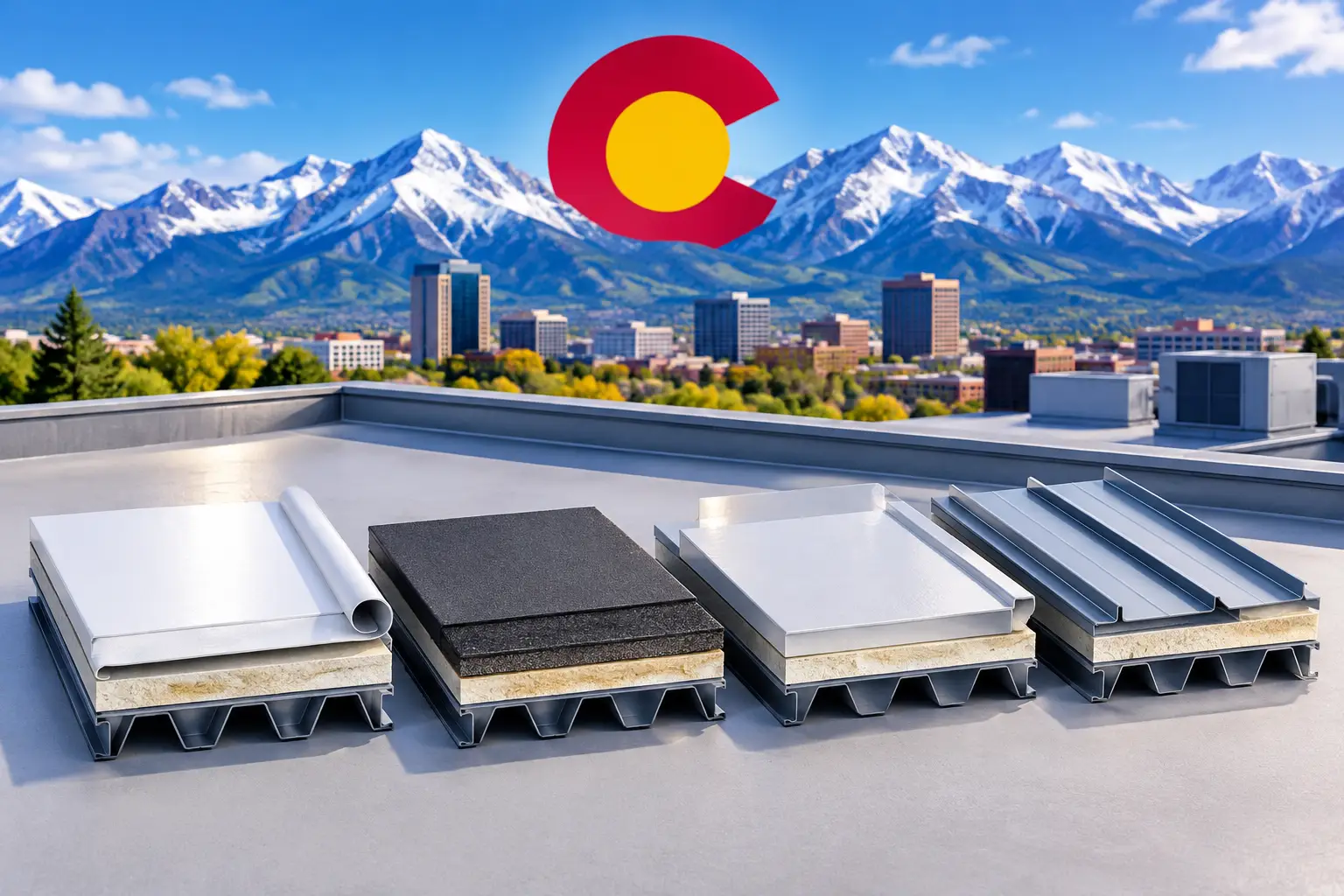
A low-slope roof can look fine from the ground while hiding wet insulation, failing seams, or drainage problems that are already working their way into the building. A useful commercial roofing systems comparison starts with the conditions on the roof, not a sales pitch for one material. Roof slope, ponding water, rooftop equipment, hail exposure, building use, and the condition of the existing roof all matter.
For property owners in Northern Colorado, weather adds another layer to the decision. Intense sun, freeze-thaw cycles, wind, heavy snow, and hail can put a roofing system through years of wear in a short time. The right choice is the one that fits the building and can be installed with careful attention to drainage, edges, penetrations, and flashing.
Start With the Roof You Have
Before comparing materials, get a thorough inspection. An experienced roofer should identify active leaks, open seams, soft areas, damaged flashing, blocked drains, and signs of trapped moisture. A roof can sometimes be restored or recovered, but only when the deck and insulation are dry and structurally sound.
Tearing off a failed roof costs more upfront, but it may be the honest recommendation if moisture has spread below the surface. Covering over wet materials can conceal the problem temporarily while adding weight and allowing deterioration to continue. A repair plan should address the source of water entry, not just the ceiling stain it created.
Also consider whether the roof has enough slope to move water to its drains or scuppers. No membrane performs at its best when water repeatedly stands on it for long periods. Improving drainage may be part of the roofing project, regardless of which system you choose.
Commercial Roofing Systems Comparison: Main Options
Single-ply membranes
Single-ply roofing includes TPO, PVC, and EPDM membranes. These systems are widely used on low-slope buildings because they are relatively lightweight, available in large sheets, and can be installed efficiently when the roof layout is straightforward.
TPO is commonly selected for its light-colored, reflective surface, which can help reduce heat gain during sunny months. Its seams are heat-welded, creating a strong connection when the work is done correctly. TPO can be a practical choice for many buildings, but membrane thickness, attachment method, edge details, and installer quality make a real difference in how it holds up through wind and hail.
PVC also has welded seams and is known for handling exposure to certain oils and chemicals better than many other membranes. That can make it worth considering for buildings with kitchen exhaust or industrial activity. It typically carries a higher material cost, so the added benefit needs to match the building's use.
EPDM is a rubber membrane, often black, with a long history on low-slope roofs. It handles temperature changes well and can be a dependable option. Because it is darker, it absorbs more heat than white membranes. Its seams and flashings deserve close attention, particularly on roofs with many penetrations or frequent foot traffic.
Modified bitumen
Modified bitumen is an asphalt-based system installed in multiple layers or sheets. It is a familiar choice for roofs that need a durable surface and a system that can be repaired in smaller sections over time. Granulated cap sheets also provide a textured, tough outer layer.
The trade-off is that installation can be more labor-intensive than a single-ply system. Depending on the application method, the crew may use hot asphalt, cold adhesive, or self-adhered materials. Proper detailing is essential around curbs, drains, walls, and transitions. For a roof with complicated shapes or a history of small, localized damage, modified bitumen can be a sensible fit.
Metal roofing
Standing seam metal roofing is often chosen for sloped roof sections, visible architecture, and long-term durability. Metal can offer excellent service life when it is properly designed, fastened, and maintained. It is also well suited to buildings where appearance matters as much as protection.
However, metal is not automatically the best answer for every building. It has a higher initial cost, requires careful planning around penetrations, and expands and contracts as temperatures change. In snowy areas, snow retention and safe runoff also need to be considered. A metal roof should be designed as a complete system, not treated as a simple material swap.
Roof coatings
A roof coating can extend the life of an existing system, but it is not a cure for every aging roof. Coatings are applied over a clean, sound, dry substrate after necessary repairs are completed. They can improve reflectivity and renew a weathered surface without the disruption of a full replacement.
Silicone coatings are often considered where ponding water is a concern because they handle standing water better than many alternatives. Acrylic coatings can be cost-effective and reflective, though they generally need positive drainage to perform well. Polyurethane coatings offer strong resistance to impact and foot traffic but may cost more.
The key question is whether the existing roof is actually a good candidate. If seams are failing throughout the field, insulation is wet, or the roof deck has problems, a coating may delay a needed replacement rather than solve the issue.
What Matters More Than the Material Name
Two roofs can use the same membrane and have very different results. Workmanship and roof design often determine whether a system delivers its expected life. The highest-risk areas are usually not the wide, open sections of roof. They are the seams, parapet walls, pipe flashings, HVAC curbs, drain bowls, edges, and transitions where materials meet.
For a Colorado property, ask how the proposed system will handle hail. No roof is completely hail-proof, and the right material depends on the building's exposure, insurance requirements, and tolerance for future repair costs. A tougher cover board, impact-rated assembly, or better protection around vulnerable areas may be as valuable as upgrading the surface membrane itself.
Wind resistance is equally important. The installation plan should account for perimeter and corner zones, where uplift forces are greatest. Fastener patterns, adhesive coverage, edge metal, and secure flashing all play a part. These details should be documented in the proposal instead of left as assumptions.
Energy performance deserves a practical look, too. A reflective surface may lower summer heat gain, but insulation thickness, air movement, building use, and local weather affect the actual result. If the roof is being replaced, it is a good time to review whether the insulation system meets current code and makes sense for the building's operating costs.
Compare Cost Over the Full Service Life
The lowest bid is not always the lower-cost roof. A proposal should make clear what is included: tear-off or recovery, insulation replacement, drain work, flashing, edge metal, permits, debris removal, warranty coverage, and repairs to damaged decking if discovered. A vague estimate makes it difficult to compare one system against another fairly.
Think in terms of likely service life, maintenance needs, repairability, and disruption to the property. A coating may be the right short-term investment for a dry roof nearing the end of its surface life. A full replacement may be the better value when leaks are recurring or moisture is already in the assembly. Metal may justify its higher initial cost when long-term appearance and durability are priorities.
A trustworthy contractor should explain the trade-offs clearly, show you what the inspection found, and recommend a system based on evidence. If hail, wind, or water intrusion may be covered by insurance, documentation from an early inspection can also help support the claim process.
The best next step is simple: have the roof inspected before a small leak becomes interior damage, lost use of the building, or a rushed replacement decision. A clear assessment gives you time to compare options, plan the budget, and choose protection that fits the property for years ahead.