
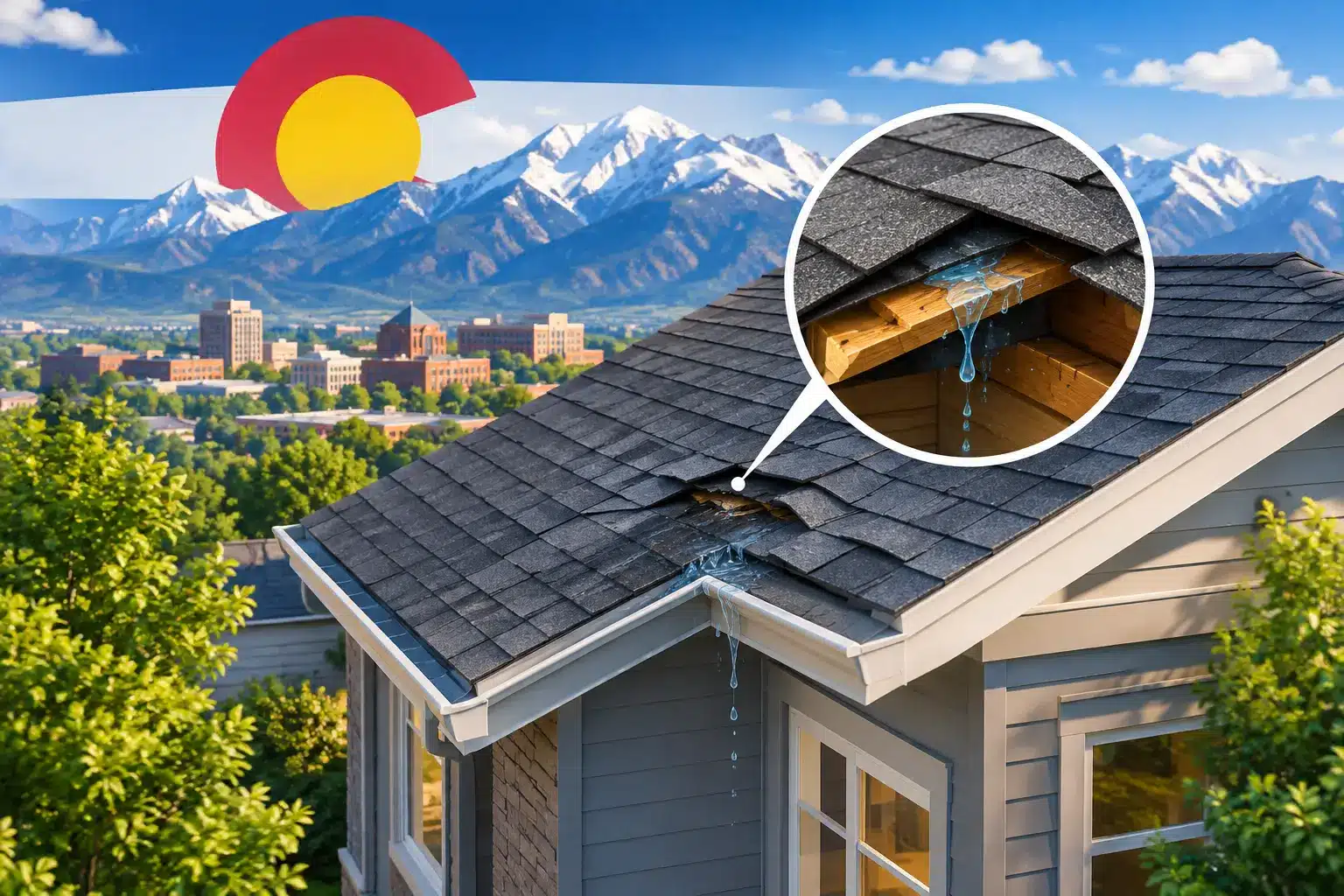
A brown ceiling spot can appear after one hard rain, then seem to dry out and disappear. That does not mean the problem is gone. This Fort Collins roof leak example shows how a small opening near a roof penetration can send water several feet before it reaches the ceiling, making the visible stain only part of the story.
For homeowners, the frustrating part is that leaks rarely announce their exact location. Water follows roof decking, framing, insulation, and gravity. A stain near a hallway light or bedroom wall may be caused by a damaged pipe boot, lifted shingle, failing flashing, or storm damage higher up the roof.
A Fort Collins Roof Leak Example From Start to Finish
Consider a typical two-story home with an asphalt shingle roof that is about 12 years old. After a late spring thunderstorm, the homeowner notices a yellowish ring on the second-floor ceiling near a bathroom. There is no active dripping, no missing shingles visible from the yard, and the attic insulation feels mostly dry by the time anyone checks it.
It would be easy to assume the stain came from a plumbing issue. But the bathroom plumbing tests dry, and the stain grows slightly after the next wind-driven rain. That clue matters. Plumbing leaks tend to persist regardless of weather. A stain that changes after rain points more strongly toward the roof or flashing system.
During an inspection, the roof shows a cracked neoprene pipe boot around a plumbing vent. The shingles themselves are still serviceable, but the boot has split along its upper edge. Rain entering at that point has been traveling down the vent pipe area and across the underside of the roof deck before wetting a small section of insulation and the ceiling drywall below.
The repair is not a full replacement. The damaged pipe boot is removed, the nearby shingles are carefully lifted and reinstalled where possible, and the new flashing is integrated correctly with the surrounding shingles. The crew also checks the roof decking from the attic. In this case, the deck is dry enough and remains structurally sound, so no decking replacement is needed.
That is the good outcome: a targeted repair completed before a small entry point becomes rot, mold risk, damaged insulation, or a larger interior repair.
Why Roof Leaks Can Be Hard to Locate
A roof is a layered system, not a single waterproof surface. Shingles shed most of the water, but flashing, underlayment, vents, valleys, pipe boots, drip edge, gutters, and roof-to-wall transitions all have a job to do. When one component fails, water can work beneath the surface without creating an obvious hole overhead.
Fort Collins weather adds to the challenge. Hail can bruise or crack roofing materials. Strong winds can lift shingle edges or loosen flashing. Snow and freeze-thaw cycles can expose weak areas around penetrations and valleys. A roof may handle a light rain without trouble but leak during a storm that pushes water sideways under wind pressure.
The source also may not sit directly above the stain. On a sloped roof, water can run along a rafter or deck seam before dropping into the attic. That is why a proper inspection looks at the roof exterior and the attic when access allows. Guessing from the ceiling alone often leads to the wrong repair.
The Details That Point to the Real Problem
In the example above, the split pipe boot was the main issue. Still, a reliable inspection should not stop at the first visible defect. Nearby shingles, flashing, sealant, ventilation openings, and the condition of the roof deck all deserve attention.
A contractor will commonly look for signs such as cracked or missing shingle tabs, exposed nail heads, lifted flashing, loose ridge caps, deteriorated sealant, granules collecting near downspouts, and staining around attic penetrations. Gutter performance matters too. Overflowing or poorly pitched gutters can send water behind fascia boards or into vulnerable roof edges, creating damage that looks like a roof leak from inside the home.
Not every issue calls for the same solution. A single failed pipe boot or slipped shingle can often be repaired. Widespread hail damage, recurring leaks in several areas, brittle shingles, or a roof nearing the end of its expected service life may make replacement the more practical long-term choice. Honest guidance means explaining that difference clearly instead of treating every leak as a replacement job.
What Happens If a Small Leak Is Left Alone
A minor ceiling stain may feel manageable, especially if it only appears during major storms. The trouble is that water does not need to pour into a room to cause damage. Slow moisture exposure can soften roof decking, wet insulation, stain drywall, loosen paint, and create conditions where mold can develop.
Repeated leaks can also make a repair more involved. Replacing a flashing component is usually straightforward when the surrounding decking is sound. Once water has damaged the substrate beneath the shingles, the affected materials may need to be removed and replaced before the roof can be restored correctly.
There is also an insurance consideration. Sudden storm damage may be handled differently than a long-running maintenance issue. Documentation helps. Photos of interior staining, dates of storms, and a professional inspection can provide useful information if a claim is appropriate. A reputable local roofing contractor can identify storm-related damage and help homeowners understand what to document, without promising coverage that only the insurance carrier can determine.
What to Do When You Notice a Ceiling Stain or Drip
Start by protecting the interior. Move furniture and electronics away from the affected area, place a container beneath active drips, and photograph the stain or water damage. If the ceiling is sagging or bulging, stay clear of it. Water can collect above drywall and create a collapse hazard.
Then, if it is safe, check the attic during daylight for damp insulation, wet framing, or visible daylight around roof penetrations. Do not walk on the roof to investigate, especially after rain, snow, or wind. Roof surfaces can be slippery, and a damaged area may not support weight reliably.
Temporary measures can reduce interior damage, but they are not a repair. Catching drips and using fans after the weather clears may help dry the room. Applying caulk from the roof surface, covering a suspicious area with a tarp, or pushing shingles back into place without identifying the cause can trap water or create a bigger issue. For an active leak, prompt professional inspection is the safer path.
Repairing the Cause, Not Just the Symptom
A lasting repair depends on finding where water entered and restoring the roof layers in the right order. For a failed pipe boot, that means more than putting sealant over a crack. The replacement flashing must be installed so water sheds over the shingles below it, while the upper portion is protected beneath the shingles above it. That overlap is what directs water away from the opening.
The same principle applies to chimney flashing, wall flashing, valleys, and skylight areas. Shortcuts may look fine from the ground, but roofs rely on correct layering. Good workmanship is often invisible once the job is finished, yet it is the difference between a repair that lasts through the next storm and one that needs attention again in a few months.
Rocky Top Total Roofing approaches roof leak repairs with that practical mindset: inspect carefully, explain the findings in plain language, and recommend the repair that fits the actual condition of the roof. Homeowners deserve fair, honest pricing and clear answers before work begins.
When to Schedule an Inspection
Schedule an inspection promptly if you see fresh ceiling staining, dripping, peeling paint near the ceiling, damp attic insulation, or water around a vent pipe or exterior wall after a storm. It is also smart to have a roof checked after significant hail or wind, even when there is no immediate leak. Storm damage can weaken materials before water finds a path inside.
If the stain is old and has not changed for years, the urgency may be lower, but the cause is still worth confirming. A previous repair may have solved the issue, or the problem may be waiting for the next heavy rain. An inspection replaces uncertainty with a clear condition report and a practical next step.
A roof leak is rarely just a stain on the ceiling. Addressing it early protects the structure behind the surface and gives you a better chance of keeping the repair simple, affordable, and built to hold up when Northern Colorado weather turns rough again.