
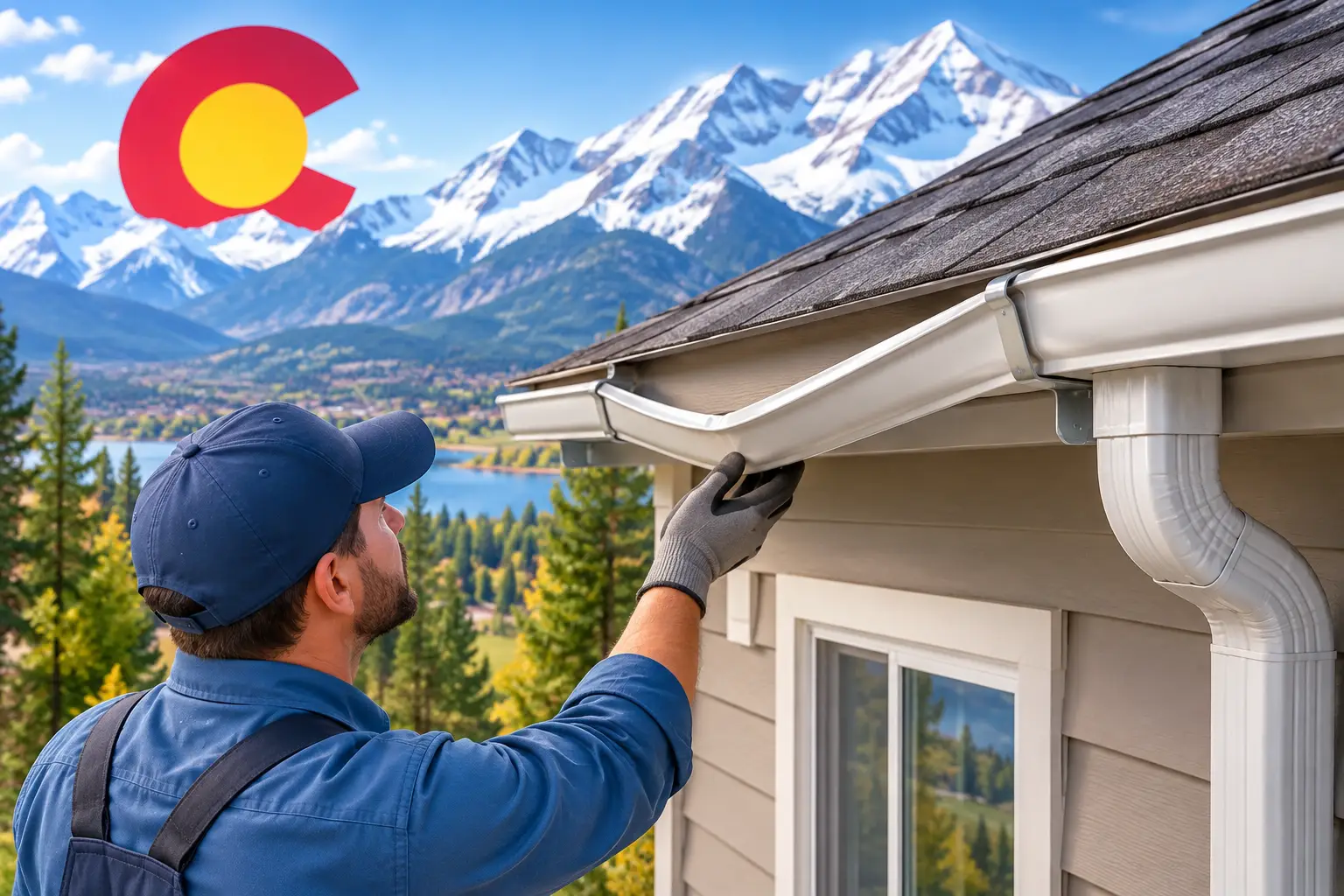
A gutter that pulls away from the roofline is more than an eyesore. Once it starts sagging, water can spill over the edge, soak the siding, pool near the foundation, and create ice hazards around the home. Understanding gutter sagging causes early gives you a better chance to make a straightforward repair before runoff causes a larger exterior problem.
In Fort Collins and across Northern Colorado, gutters work hard through heavy spring rain, sudden hailstorms, wind, snow, and freeze-thaw cycles. A little movement after a storm may not seem urgent, but gutters are designed to maintain a steady slope toward the downspouts. When that slope is lost, the whole drainage system stops doing its job.
The Most Common Gutter Sagging Causes
Debris buildup adds more weight than most homeowners expect
Leaves, pine needles, roof grit, twigs, and windblown debris settle in gutters over time. When rainwater cannot move through the trough, the debris becomes wet and heavy. In winter, trapped water can freeze and add even more weight along the gutter run.
That added load puts steady pressure on hangers, brackets, and fasteners. A section may begin to dip in the middle, then pull away near the fascia board. Cleaning can solve the issue if the hardware is still sound, but cleaning alone will not correct loose fasteners or damaged gutter sections.
Gutter guards can reduce routine buildup, especially around mature trees, but they are not a substitute for proper installation and occasional inspection. The right guard depends on the roof, surrounding vegetation, and how much snow and debris the home sees.
Loose, missing, or improperly spaced hangers
Hangers are the hardware that holds a gutter in place. If they are loose, rusted, bent, or installed too far apart, the gutter can sag even when it is relatively clean. This is one of the most common problems on older systems and on gutters installed with lightweight or poorly secured hardware.
A repair may be as simple as adding new hidden hangers and securing them into solid framing. However, screws that keep pulling loose can point to trouble behind the gutter. The fascia board may be soft, split, or rotted, leaving nothing dependable for the hardware to grip.
Fascia damage weakens the mounting surface
The fascia is the board at the edge of the roof where most gutters are attached. If water has been overflowing for months or years, that board can deteriorate. Roof leaks, ice buildup, and failing drip edge can also allow moisture to reach the wood behind the gutter.
When fascia damage is the real issue, simply driving in longer screws is rarely a lasting fix. The damaged material needs to be assessed and repaired so the new or reinstalled gutter has a stable backing. Otherwise, the gutter may sag again as soon as it carries a full load of rain or snow.
Ice and snow place concentrated pressure on gutters
Northern Colorado weather can create conditions that are especially hard on gutter systems. Snow slides off a warm roof, ice forms inside a clogged trough, or repeated melting and refreezing creates a dense ridge of ice along the edge. Gutters are built to carry water, not to support heavy ice masses.
A single winter event can bend hangers, distort a long run of aluminum, or pull a gutter away from the fascia. If sagging appears after snow or ice, avoid yanking on the gutter or chipping aggressively at the ice. That can make the damage worse and create a safety risk. A professional inspection can identify whether the system needs reattachment, sectional replacement, or adjustments to improve drainage.
Poor slope leaves water standing in the gutter
Gutters need a slight, consistent pitch toward each downspout. Without it, water remains in low spots rather than flowing out. Standing water adds weight, encourages corrosion, and often turns into ice during cold weather.
Poor slope can happen because the gutter was not installed correctly, but it can also develop after brackets loosen or the fascia shifts. In some cases, a gutter looks level from the ground while still holding enough water to create trouble. A contractor can check the pitch across the full run and reset it where needed.
Undersized or damaged downspouts back water up
A gutter can be firmly attached and still sag if its downspouts cannot move water away fast enough. A blockage at the elbow, a crushed section, or too few downspouts for the roof area can cause water to back up during a hard rain.
Watch for water pouring over the gutter in one location while the rest of the system appears normal. That usually points to a drainage bottleneck rather than a simple cleaning issue. Downspout placement, extensions, and capacity all matter, particularly on large roof planes that send a lot of water to one corner.
Storm and wind damage can shift the entire system
Hail does not usually make a gutter sag by itself, but strong storms often bring wind, flying debris, and sudden water volume at the same time. Wind can loosen hardware, branches can dent or twist a gutter, and an impact can throw the slope out of alignment.
After a severe storm, look for fresh dents, separated seams, loose downspouts, and water marks beneath the gutter. If your roof also has visible storm damage, it makes sense to have the exterior inspected as one system. Gutters, roof edges, flashing, and fascia all work together to keep water out of the home.
Signs a Sagging Gutter Needs Prompt Attention
Some movement is easy to see from the driveway. Other warning signs are more subtle. Water streaks on siding, peeling paint near the eaves, puddles near the foundation, and erosion beneath a downspout can all mean the gutters are failing to drain correctly.
You may also notice a gap between the back of the gutter and the fascia, a visible dip that holds water after rain, or joints that start dripping. These are not problems to put off until the next season. Water follows the easiest path, and when it misses the gutter, it can reach places that are more expensive to repair.
Can You Repair a Sagging Gutter Yourself?
For a clean, easily accessible gutter with one loose hanger, a capable homeowner may be able to make a small adjustment. The work becomes less simple when there is hidden fascia damage, distorted metal, improper slope, roof-edge issues, or a long section pulling away from the house.
Ladders, wet surfaces, and overhead power lines make gutter work risky. There is also a difference between making a gutter look straighter and restoring its proper support and drainage. If you are repeatedly tightening the same screws, seeing water stand in the trough, or noticing damage after a storm, it is time for a closer inspection.
How a Professional Repair Protects Your Home
A quality gutter repair starts with finding the reason for the sag, not just fastening the loose area back into place. The system should be checked for debris, hanger condition, fascia stability, slope, seams, downspout flow, and signs of roof-edge water damage. That approach helps prevent a short-term repair from becoming a repeat problem.
Rocky Top Total Roofing provides straightforward gutter inspections and repairs for homeowners who need clear answers and dependable workmanship. Whether a section needs to be resecured, realigned, repaired, or replaced, the goal is the same: direct rainwater away from your home the way it should.
If you can see a dip, overflow, or separation from the ground, do not wait for the next heavy storm to test it. A timely gutter repair can protect the roofline, siding, foundation, and the peace of mind that comes with a home ready for Colorado weather.