
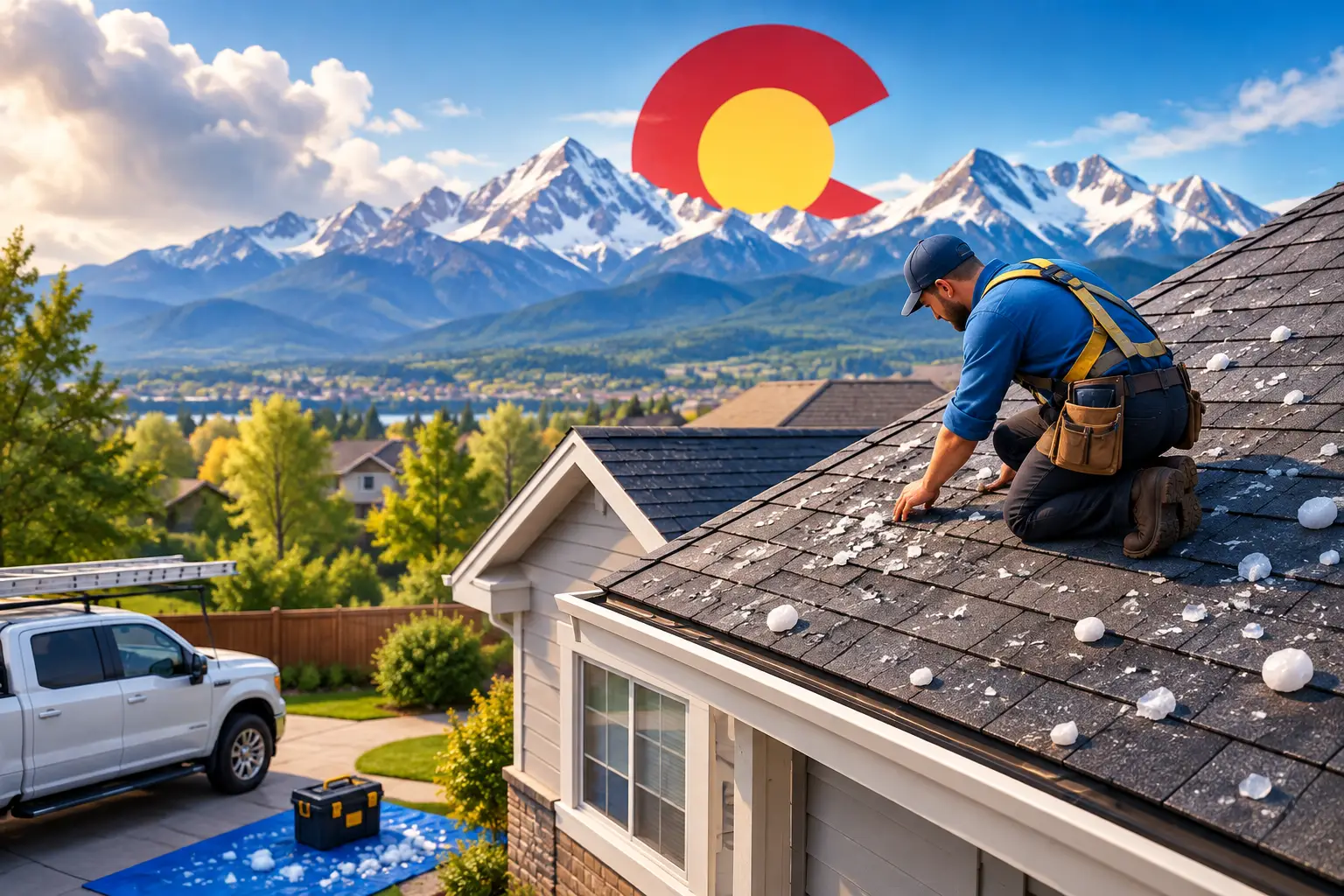
A hailstorm can leave your yard covered in ice, your siding marked up, and your roof looking perfectly normal from the driveway. That last part is what catches many homeowners off guard. Hail restoration is not just about replacing obvious missing shingles. It starts with finding the damage that can shorten a roof's life, cause leaks later, and create trouble when you need to file an insurance claim.
In Northern Colorado, strong spring and summer storms can hit fast. Taking the right steps in the days after a storm helps protect your home, your budget, and your ability to make sound repair decisions without pressure.
What Hail Can Do to a Roof
Asphalt shingles are built to handle normal weather, but hail hits with concentrated force. A hard impact can knock loose the protective granules on the shingle surface, bruise the mat beneath it, or crack an older, brittle shingle. The roof may still shed water for a while, but its ability to handle sun, wind, snow, and future storms may be reduced.
Not every hailstorm causes claim-worthy damage. The result depends on the size and density of the hail, wind direction, the slope of the roof, the roof's age, and the condition of the materials before the storm. A newer roof can still be damaged, while an older roof may show wear that is unrelated to the storm. That is why a professional inspection matters. It separates storm damage from normal aging and gives you a clear basis for your next step.
Hail can also affect roof vents, flashing, skylights, gutters, downspouts, siding, window screens, and exterior paint. A dented gutter does not automatically mean the roof is damaged, but it is a useful sign that the property took a direct hit.
Signs You Can Check Safely From the Ground
You do not need to climb onto your roof after a storm. In fact, walking on a damaged or wet roof can create a safety risk and may cause additional damage. Start with a careful walk around your property when conditions are safe.
Look for fresh dents in metal gutters, downspouts, roof vents, and garage doors. Check for torn window screens, chipped paint, damaged outdoor fixtures, and shingle granules collecting at the end of downspouts. Granules can come off naturally as a roof ages, so this sign alone is not proof of hail damage. It is one piece of the bigger picture.
Inside, check the attic and upper ceilings for fresh water spots, damp insulation, or a musty odor. Leaks do not always appear immediately after hail. A damaged shingle or flashing detail can let moisture in gradually, especially after the next heavy rain or wind-driven snow.
Take clear photos of what you see and make a note of the storm date. This simple documentation can be helpful if you need to speak with your insurer later.
Why a Prompt Roof Inspection Helps
The best time to schedule an inspection is soon after a significant hailstorm, even if you do not see a leak. A qualified roofing professional can inspect the shingles, flashing, penetrations, valleys, ridge areas, and gutter system for storm-related damage. They should also explain their findings in plain language, including whether repairs, monitoring, or a replacement discussion makes sense.
Prompt does not mean rushed. You should not sign a contract at the door simply because someone says your roof has damage. A dependable contractor will give you time to review the inspection results, ask questions, and understand the scope of recommended work. They should be clear about what they observed and avoid promising what an insurance company will or will not approve.
An early inspection is especially useful because insurance policies often have deadlines for reporting damage. The exact timeframe depends on your policy, so review it or call your insurance carrier if you have questions. Waiting until a small issue becomes an active leak can make the situation more expensive and more complicated.
Hail Restoration and the Insurance Process
For many homeowners, the insurance claim is the most stressful part of hail restoration. It does not have to be confusing. Start by reviewing your policy deductible and coverage. Then report the damage to your carrier if an inspection supports a storm-related claim.
Your insurance company may send an adjuster to inspect the property and prepare an estimate. Your roofing contractor can help you understand the scope of work and identify items that may need clarification. This is different from guaranteeing coverage. The insurer makes the final claim decision, but an experienced local contractor can help ensure the damage is documented accurately and that the repair plan addresses the affected areas.
Keep every document in one place: inspection notes, photos, insurance correspondence, estimates, and receipts for any emergency protection work. If a tarp or temporary repair is needed to prevent water intrusion, save the receipt and take photos before and after the work. Protecting the home from further damage is usually the right move, but make sure the repair is performed safely and documented well.
Be cautious with offers that sound too easy. No honest contractor can waive your deductible through hidden pricing or promise a free roof. Fair, honest pricing and a clear written scope are better protection than a deal that creates problems later.
Repair or Replacement: What Makes Sense?
Hail restoration does not always mean a full roof replacement. If damage is limited to a small area and matching materials are available, a targeted repair may be the practical choice. Repairs can address isolated shingle damage, lifted flashing, punctures, or gutter issues without disturbing the rest of the roof.
Replacement may be recommended when hail damage is widespread, shingles have significant bruising or granule loss, the roof is already near the end of its service life, or repairs would leave the system uneven and difficult to maintain. Local building requirements and manufacturer instructions can also affect the right approach.
A good contractor should walk you through the trade-off. Repairing a roof costs less upfront when the damage is truly limited. Replacing a heavily affected roof can provide more consistent protection and avoid repeated spot repairs after future weather events. The right answer should be based on the roof in front of you, not a one-size-fits-all sales pitch.
Do Not Forget the Gutters
Gutters are part of your home's water-management system, and hail can damage them in ways that are both cosmetic and functional. Dents, loosened hangers, cracked seams, and damaged downspouts can keep water from moving away from the foundation as intended.
During a hail inspection, have the gutter system checked along with the roof. If gutters are already pulling away, overflowing, or draining too close to the home, storm restoration is a practical time to correct those issues. Gutter guards can also be worth discussing if leaves and debris regularly cause clogs, though they are not the right fit for every roofline or tree cover situation.
Choosing a Contractor After a Storm
Storms bring legitimate local roofers and out-of-town crews into the same neighborhoods. Focus on the basics: local experience, a physical business presence, clear written estimates, proof of insurance, and workmanship coverage. Ask who will perform the work, how the property will be protected during the job, and how cleanup will be handled.
You should also expect direct answers about materials, timing, permits when required, and payment terms. A contractor who knows Fort Collins and the surrounding area understands the weather demands, local building expectations, and the importance of getting the home dried in properly before the next storm rolls through.
Rocky Top Total Roofing approaches storm work with careful inspections, straightforward communication, and craftsmanship backed by a 5-year workmanship warranty. The goal is not to make a storm more complicated than it already is. It is to help homeowners understand the condition of their roof and move forward with confidence.
A hailstorm is disruptive, but the next step can be simple: document what you can see, schedule a professional inspection, and choose a repair plan based on real evidence. A well-handled restoration protects more than shingles. It helps keep your home ready for the weather Colorado sends next.