
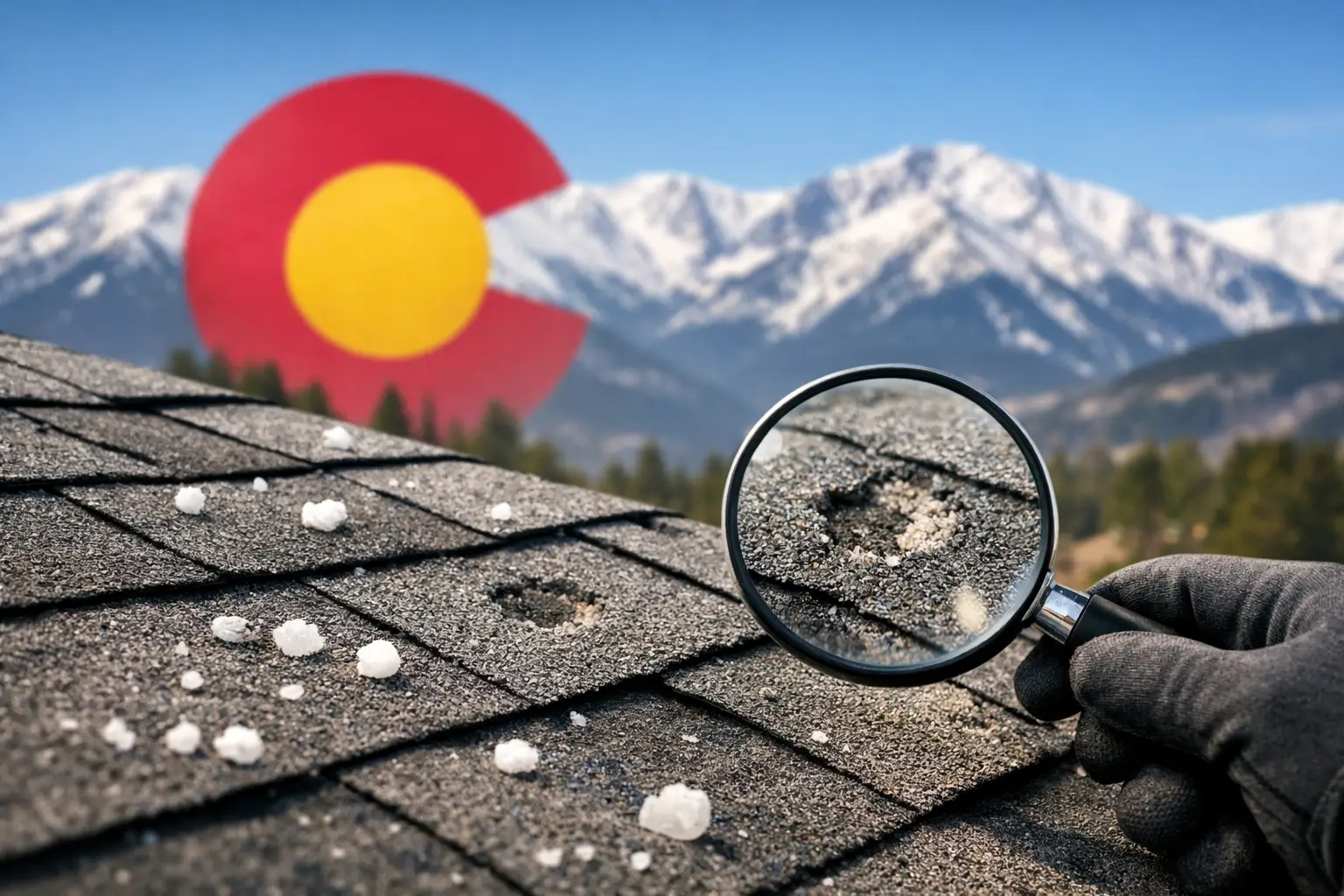
When a Colorado hailstorm rolls through, the damage is not always obvious from the ground. You may not see a leak right away, and your shingles can still look mostly intact from the driveway. If you are wondering how to know if roof has hail damage, the key is knowing what signs show up first, what damage is easy to miss, and when it makes sense to call for a professional inspection.
In Fort Collins and across Northern Colorado, hail can hit hard enough to shorten the life of a roof even if it does not tear it apart in one storm. That matters because small impact marks can turn into bigger problems later. Granule loss, bruised shingles, flashing damage, and loosened roof components often start as minor issues, but they leave your home more exposed to water, sun, and future wind damage.
How to Know if Roof Has Hail Damage From the Ground
Start with what you can safely check without climbing onto the roof. A ground-level walkaround after a storm can tell you a lot.
Look first at your gutters, downspouts, siding, garage doors, window trim, deck rails, and outdoor HVAC equipment. If hail left dents on soft metal surfaces, there is a good chance your roof took hits too. Damage rarely affects only one part of the exterior. The roof may be the hardest part to see, but nearby impact signs often tell the story.
You should also check for shingle granules collecting in downspout outlets or along the ground near the ends of gutters. Asphalt shingles are coated with granules that protect them from UV exposure. After hail, those granules can loosen and wash away. Some granule loss is normal as a roof ages, but a sudden increase after a storm is worth attention.
From the yard, scan the roof for dark spots, uneven patches, or shingles that look shiny in isolated areas. Hail strikes can knock away granules and expose the asphalt layer underneath, which often looks darker than the surrounding roof surface. You may also notice bent ridge caps, damaged vents, or metal flashing that looks dinged up.
What Hail Damage Looks Like Up Close
A closer inspection usually reveals more than a ground-level view. On asphalt shingles, hail damage often appears as random impact marks rather than a clean pattern. That randomness is one reason it can be hard for a homeowner to identify with confidence.
A hail-hit shingle may show a small round or irregular spot where granules have been knocked off. In some cases, the shingle feels soft or bruised where the mat beneath the surface has been weakened. That kind of damage is easy to miss unless you know what you are feeling for.
Hail can also create cracks, especially on older or more brittle shingles. If your roof already had some age on it, a storm may push it past the point where repair makes sense. A newer roof may only need limited repairs. It depends on the age of the system, the slope, the shingle type, and how concentrated the storm damage was.
Metal roof components can provide good clues too. Dented flashing, soft metal vents, roof caps, and turbine vents often show impact clearly. Those dents do not always mean the roof covering itself failed, but they support the case that hail made contact with the entire roofing system.
Common Signs Inside the Home
Sometimes the first clue shows up indoors, not outside. If you notice a new water stain on the ceiling, damp insulation in the attic, or discoloration around vent penetrations after a storm, hail damage may be part of the problem.
That said, leaks do not happen after every hail event. A roof can suffer impact damage and still keep water out for a while. That is one reason waiting for an active leak is not the best test. By the time water makes it inside, repairs are often more involved.
In the attic, look for damp wood, dark staining, or daylight around roof penetrations. Even if you do not see moisture, a musty smell after a storm can point to a developing issue. Interior signs are important, but they usually mean the roof problem has already moved beyond surface wear.
Why Hail Damage Gets Missed
One of the biggest challenges with hail damage is that it does not always look dramatic. People expect to see torn shingles or holes, but hail often causes impact bruising that weakens the roof without creating an immediate leak.
The damage can also be very localized. One slope may be hit hard while another has almost no visible wear, depending on wind direction and storm angle. Tree cover, roof pitch, and surrounding buildings can all change how the hail lands. A quick glance from the street may miss the worst areas entirely.
There is also the issue of normal aging versus storm damage. Blistering, worn granules, foot traffic marks, and manufacturing defects can resemble hail damage to an untrained eye. That is where a professional inspection matters. An honest roofing contractor should be able to tell the difference and explain what they are seeing in plain terms.
When to Schedule a Roof Inspection
If your neighborhood took a known hailstorm, it is smart to get the roof checked sooner rather than later. You do not need to wait for a leak, and you do not need to be certain there is damage before asking for an inspection.
Timing matters for practical reasons. Storm-related issues are easier to document when they are fresh, and that can help if insurance becomes part of the process. It also gives you a clearer path for planning repairs before the next round of severe weather.
A good inspection is especially important if your roof is older, if your neighbors are getting repairs, or if you see dents on gutters and other metal surfaces around the property. Commercial buildings should be checked too, particularly low-slope systems where membrane damage may not be visible without a trained look.
What a Professional Roofer Will Check
A proper hail inspection goes beyond spotting a few marks on shingles. The roofer should evaluate the full roofing system, including shingles or membrane surfaces, ridge caps, flashing, vents, pipe boots, valleys, gutters, and downspouts.
They should also document the location and severity of damage. That includes noting whether the impacts are cosmetic, functional, or severe enough to justify repair or replacement. Not every hail mark means you need a full new roof, and a trustworthy contractor will say that if limited repairs are the better answer.
For homeowners dealing with possible insurance claims, clear documentation matters. Photos, written findings, and a straightforward explanation of what was storm-related can make the next steps easier. This is where working with a local contractor who understands Colorado weather and claim expectations can save time and stress.
Repair or Replacement Depends on the Roof
There is no one-size-fits-all answer after hail. Some roofs only need spot repairs where a few shingles or flashing components took the hit. Others have widespread granule loss or bruising that compromises the system across entire slopes.
Age matters here. If the roof was already near the end of its life, hail damage can tip the scale toward replacement. If the roof is newer and the damage is isolated, repair may be the most cost-effective move. Material type matters too. Asphalt shingles, metal roofing, and flat commercial systems all respond differently to hail.
The best decision comes from a real inspection, not guesswork from the yard or pressure from someone knocking on the door after a storm.
What Homeowners Should Avoid
Do not climb onto a wet or steep roof to inspect it yourself. It is not worth the risk. Hail damage is often subtle enough that an untrained person may not gain much by going up there anyway.
It is also wise not to assume everything is fine just because there is no leak yet. A roof can keep shedding water while still carrying impact damage that reduces its life. And if someone immediately pushes for a full replacement without clearly showing you why, get a second opinion.
Homeowners in Northern Colorado need practical answers, not scare tactics. A dependable inspection should leave you understanding the condition of your roof, the urgency of the issue, and the options in front of you.
If you are trying to figure out how to know if roof has hail damage, the safest answer is this: look for exterior clues, pay attention to changes after a storm, and have the roof checked before a small problem turns into a costly one. Rocky Top Total Roofing believes good roofing help starts with honest information, and that is often what gives homeowners the confidence to make the right call.