
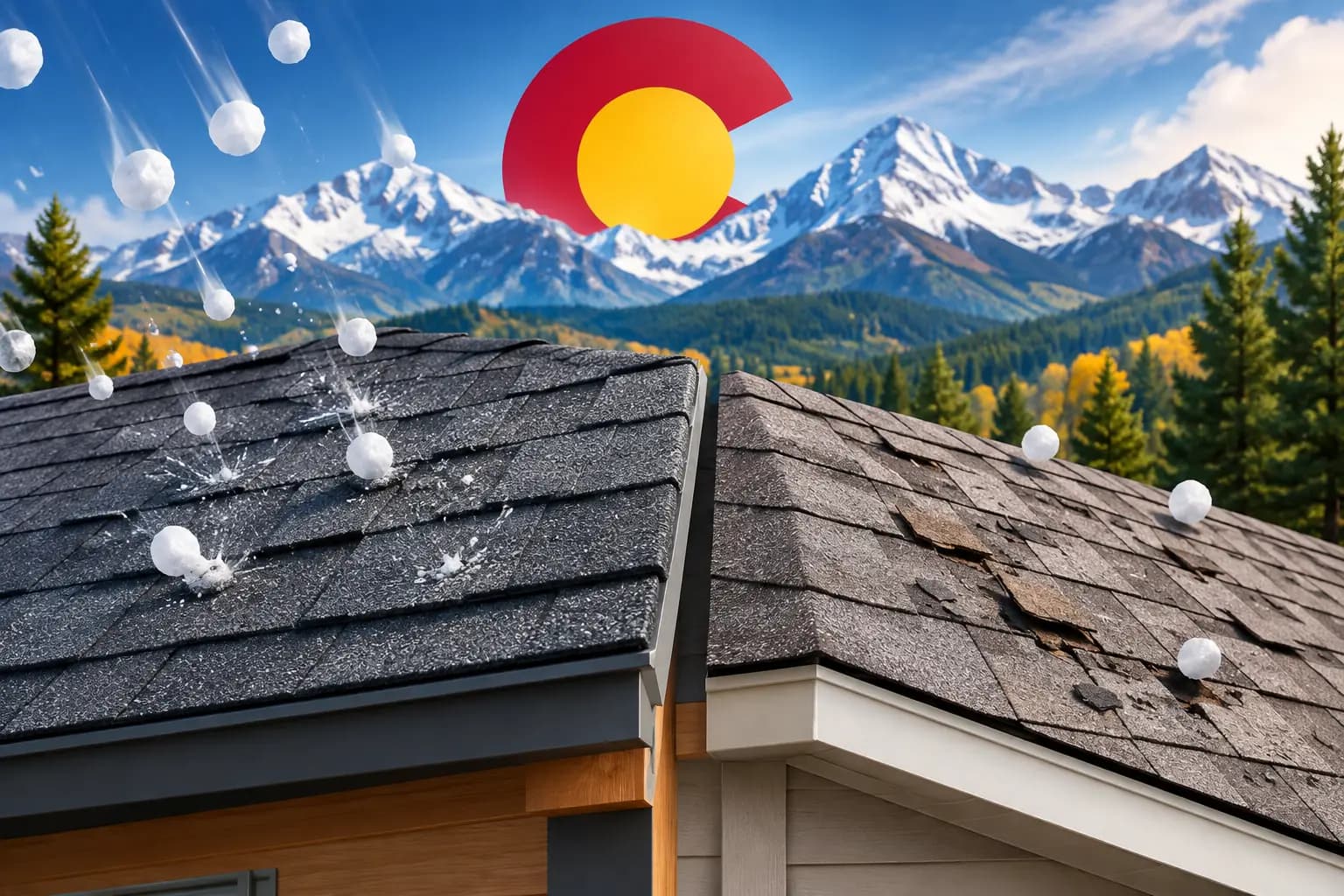
A roof can look perfectly sound after a hailstorm and still have damage that shortens its life. That is why the choice between impact resistant shingles versus standard shingles matters so much for homeowners in Fort Collins and across Northern Colorado. The right material is not simply the toughest one on the shelf. It is the one that fits your home, your budget, your insurance requirements, and the weather your roof is likely to face.
Standard asphalt shingles remain a practical, dependable choice for many homes. Impact-resistant shingles add another level of protection against hail and flying debris, but they cost more upfront and are not a guarantee against every type of storm damage. A clear comparison helps you make a decision you can feel good about before a replacement is underway.
What Makes a Shingle Impact Resistant?
Impact-resistant asphalt shingles are designed to better withstand a hard strike from hail. Many use a reinforced asphalt blend or a modified rubberized layer that allows the shingle to flex when hit rather than crack as easily. The goal is to reduce bruising, fractures, and granule loss that can expose the roof to future problems.
The rating matters. Many homeowners look for a Class 4 impact rating, which is commonly tested under the UL 2218 standard. During this test, a steel ball is dropped onto the material to simulate hail impact. A Class 4 rating is the highest level in that test, though it does not mean the shingle is hailproof or that it cannot be damaged in a severe storm.
Standard shingles are typically built for everyday weather protection, including rain, sun, and normal wind exposure. They can perform well for many years when properly installed and ventilated. Their main limitation is that a sharp hail impact may crack or bruise them more readily than an impact-resistant product.
Impact Resistant Shingles Versus Standard: The Real Differences
The biggest difference is how each option responds when hail hits. Impact-resistant shingles are engineered to absorb more of the blow. Standard shingles can lose granules, crack, or develop soft bruised areas that may not be obvious from the ground.
That added resilience can be especially valuable in Northern Colorado, where spring and summer storms can move in quickly and produce damaging hail. If your neighborhood has had multiple hail claims in recent years, a stronger shingle may offer worthwhile peace of mind between storms.
Appearance is another consideration. Both standard and impact-resistant shingles come in a wide range of colors and architectural styles. You do not have to choose a plain-looking roof to get better impact protection. Still, product availability, color selection, and warranty coverage vary by manufacturer, so it pays to review the specific shingle being proposed rather than relying on a broad label.
Installation quality remains just as important as the material itself. A Class 4 shingle installed with poor flashing, incorrect nailing, or weak ventilation will not protect a home the way it should. Strong materials need skilled workmanship behind them.
Upfront Cost and Long-Term Value
Impact-resistant shingles generally cost more than comparable standard architectural shingles. The higher price reflects the material design and, in some cases, upgraded warranty options. The difference can make standard shingles the better fit for a homeowner who is working within a tight replacement budget or plans to sell soon.
For a long-term owner in a hail-prone area, the calculation can look different. A roof that holds up better after smaller storms may be less likely to need premature repairs or replacement. It may also help reduce the disruption of dealing with repeated inspections, claims, and repair appointments.
That said, paying more does not automatically create savings. A large hail event can damage almost any roof system, including impact-resistant shingles. Local labor costs, roof size, roof pitch, the number of valleys and penetrations, and the condition of the existing roof deck all affect the total project cost. The best way to compare value is to request an itemized estimate for both options and look at the whole roof system, not just the price per bundle.
Can Impact-Resistant Shingles Lower Insurance Costs?
Some insurance carriers offer a premium discount for qualifying Class 4 roofs. That discount can make impact-resistant shingles more appealing, but homeowners should verify the details before making a decision. Insurers may require proof of the product rating, installation documentation, photos, or a completed certificate.
A discount also does not mean your deductible disappears or that every future hail claim will be covered. Policy terms, deductibles, exclusions, roof age, and claim history still matter. Insurance companies can also change discount programs over time.
Before signing a contract, call your insurance agent and ask three direct questions: Does your policy offer a Class 4 roof discount? Which documentation is required? Will the discount apply to the exact shingle product you are considering? A short call can prevent assumptions that lead to disappointment later.
When Standard Shingles Are the Better Choice
Standard shingles are not a lesser decision by default. They are often the right choice when the roof is in a lower hail-exposure area, the budget needs to stay controlled, or the home will likely be sold in the near future. A quality architectural shingle installed correctly can provide durable, attractive protection for years.
They can also make sense after a storm claim when insurance coverage is based on replacing the existing roof with like materials and the homeowner does not want to pay the difference for an upgrade. In that situation, a contractor can explain the added cost of impact-resistant materials clearly so you can decide whether the upgrade is worth it.
What matters most is avoiding the temptation to choose only by the lowest estimate. Missing components, rushed installation, or weak warranty support can cost more than a better shingle choice ever saves.
When an Impact-Resistant Roof Is Worth Considering
Impact-resistant shingles deserve serious consideration if your home has been hit by hail before, your neighborhood sees frequent storm activity, or you expect to remain in the home for many years. They can also be a smart option if your insurer confirms a meaningful premium discount.
They are particularly practical when you are already replacing a storm-damaged roof. The old roof is coming off, crews are already mobilized, and the incremental cost of upgrading may be easier to justify than replacing a roof again sooner than expected.
Homeowners who value reduced worry often appreciate the upgrade as well. No roof can eliminate storm risk, but choosing a shingle designed for impact can give you a stronger starting point when the next hailstorm rolls through.
Start With a Professional Roof Inspection
The decision should begin with the condition of your current roof. Hail damage is not always visible from the driveway, and not every dark spot or missing granule is storm damage. A professional inspection can identify bruising, cracks, damaged flashing, loose ridge materials, and other issues that affect whether repair or replacement makes sense.
An honest contractor should explain what they found, show you the affected areas when possible, and provide straightforward options. If an insurance claim may be involved, proper documentation can make the process much easier. Rocky Top Total Roofing helps homeowners understand storm damage, compare material choices, and move forward with fair, honest pricing.
A roof replacement is a major investment, but it does not have to be a confusing one. Choose the shingles that fit your real storm exposure and long-term plans, then make sure they are installed by a team that treats your home with the care it deserves.