
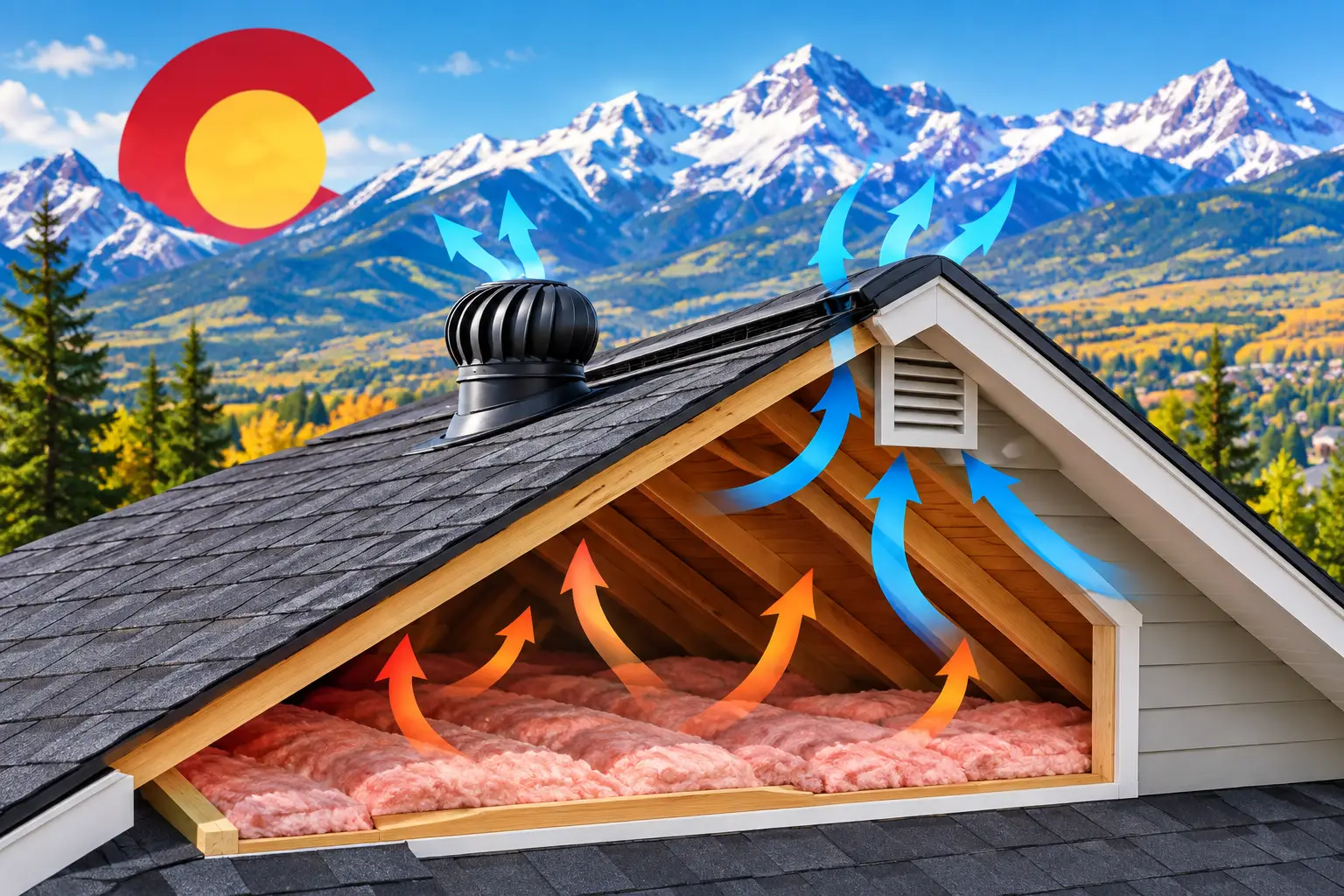
A hot upstairs room, damp insulation, or ice collecting along the eaves can point to the same overlooked problem: the attic is not moving air the way it should. To improve attic ventilation properly, your roof needs more than a few vents cut into the decking. It needs a balanced system that brings fresh air in low, lets warm moist air out high, and works with the insulation already in place.
For homeowners in Fort Collins and across Northern Colorado, attic ventilation matters year-round. Summer sun can drive attic temperatures far above the outdoor temperature. Winter snow, freeze-thaw cycles, and warm air escaping from the house can create condensation and ice-dam conditions. The right approach protects the roof system without creating new leaks, drafts, or energy problems.
Why attic ventilation affects your roof
Your attic is part of the roof system, not just a storage space. When heat and moisture build up there, they can shorten shingle life, dampen insulation, stain roof decking, and put extra stress on your heating and cooling system.
In summer, trapped heat can make the rooms below the attic harder to cool. Ventilation will not replace proper insulation or solve every comfort issue, but it helps reduce heat buildup under the roof. That can be especially helpful on dark roofs and homes with limited shade.
In winter, moisture is often the bigger concern. Warm indoor air naturally rises. If it reaches a cold attic through gaps around light fixtures, bath fans, wiring, attic hatches, or plumbing penetrations, it can condense on the underside of the roof deck. Over time, that moisture may lead to mold, wood deterioration, rusty fasteners, and wet insulation that no longer performs as intended.
Ventilation helps remove some of that warm, humid air. But it works best alongside air sealing and adequate insulation. More vents alone cannot fix a major moisture leak from the living space below.
Signs you may need to improve attic ventilation
Some ventilation problems are visible from inside the attic. Others show up as roof or indoor comfort issues. If you notice more than one of these signs, a professional roof inspection is a smart next step:
- The attic feels extremely hot and stagnant during warm weather.
- Insulation looks damp, compressed, or matted down.
- Roof decking has dark stains, visible mold growth, or signs of condensation.
- Nails protruding through the roof deck are rusty or have water droplets on them.
- Ice dams form repeatedly along roof edges in winter.
- Shingles appear to age, curl, or lose granules earlier than expected.
- Upstairs rooms stay noticeably hotter or colder than the rest of the home.
- Bathroom fans, kitchen vents, or dryer vents discharge into the attic instead of outside.
A single symptom does not always mean ventilation is the cause. For example, ice dams can result from heat loss, insufficient insulation, poor air sealing, roof geometry, or a combination of issues. That is why a complete evaluation matters more than adding a vent based on a quick guess.
The basics of a balanced attic ventilation system
A well-designed passive system usually relies on intake vents near the lower edge of the roof and exhaust vents near the ridge. As warm air rises and exits through the upper vents, outside air enters through the lower vents. This creates a natural flow through the attic.
Intake vents: where fresh air enters
Soffit vents are the most common intake option. They sit beneath the roof overhang and are less visible from the street. For many homes, continuous soffit ventilation provides more even airflow than a few small individual vents.
The intake must remain open after insulation is installed. Insulation pushed tightly into the eaves can block soffit vents and stop airflow before it starts. Proper baffles or vent chutes keep insulation in place while leaving an air channel from the soffit into the attic.
Some roof designs have little or no overhang, which limits soffit ventilation. In those situations, a roofing professional may recommend another intake solution. The right choice depends on the roof shape, framing, and available vent area.
Exhaust vents: where hot, moist air leaves
Ridge vents run along the peak of a sloped roof and are often the preferred exhaust option because they release air evenly across the highest part of the attic. When installed correctly, they blend into the roofline and work well with continuous soffit intake.
Other homes use box-style roof vents, gable vents, or powered attic fans. These options can have a place, but mixing exhaust types without a plan can reduce performance. For example, a powered fan may pull air from nearby roof vents or gable vents rather than drawing intake air through the soffits. That can leave parts of the attic poorly ventilated and may pull conditioned air from the home if ceiling leaks are present.
The goal is not to install every vent type available. It is to provide enough properly placed intake and exhaust ventilation for the attic size and roof configuration.
Do not confuse ventilation with insulation
Ventilation and insulation work together, but they do different jobs. Insulation slows heat transfer between the living space and the attic. Air sealing prevents warm, moist indoor air from leaking upward. Ventilation helps remove heat and moisture that still reach the attic.
If the attic floor has thin, uneven, or moisture-damaged insulation, improving ventilation may not deliver the comfort improvement you expect. Likewise, adding insulation without protecting soffit airflow can create a ventilation problem.
Before making changes, look for common air leaks. Attic hatches, recessed lights, duct penetrations, plumbing stacks, and bath fan housings are frequent trouble spots. A properly vented bathroom fan should terminate outdoors, not in the attic. Sending humid air into the attic can overwhelm even a well-designed vent system.
Common mistakes that can make the problem worse
The biggest mistake is adding exhaust ventilation without confirming intake ventilation. A ridge vent cannot perform well if outside air has no clear path into the attic. It may draw air from gaps in the ceiling below instead, which wastes energy and brings indoor moisture into the attic.
Another mistake is covering existing vents during a reroof or exterior project. Fresh paint, insulation, insect screens clogged with debris, and improperly installed fascia materials can all restrict airflow. Screens should keep pests out, but they also need to stay clean enough to allow air through.
Homeowners should also be cautious about cutting new holes in the roof. Every roof penetration must be flashed correctly to prevent leaks. An improperly installed vent can turn a ventilation upgrade into a water-damage repair. This is work best handled during a roof inspection, repair, or replacement by a contractor who understands the full roof assembly.
When a roof replacement is the best time to upgrade
A roof replacement is often the most practical time to correct ventilation issues. The existing shingles are already being removed, roof decking can be inspected, and ridge ventilation can be installed cleanly if the roof design supports it.
It is also a good time to check for blocked soffits, damaged decking, inadequate baffles, and signs of long-term moisture. If storm or hail damage has led to a replacement claim, ventilation should still be part of the conversation. A new roof is a major investment, and the system underneath it needs to support its expected service life.
At Rocky Top Total Roofing, an inspection can help identify whether the concern is vent placement, blocked intake, insulation, roof damage, or several issues working together. The most useful recommendation is one based on what the home actually needs, not a one-size-fits-all add-on.
A practical next step for your home
Start by checking the easy items: make sure bath fans vent outdoors, keep attic access doors closed and insulated, and look for insulation blocking the eaves. Then schedule a roof and attic evaluation if you see moisture, recurring ice dams, premature shingle wear, or consistently uncomfortable upstairs rooms.
A properly balanced attic does quiet work in every season. It helps your insulation stay dry, gives your roof deck a better environment, and supports the long-term protection your home deserves.