
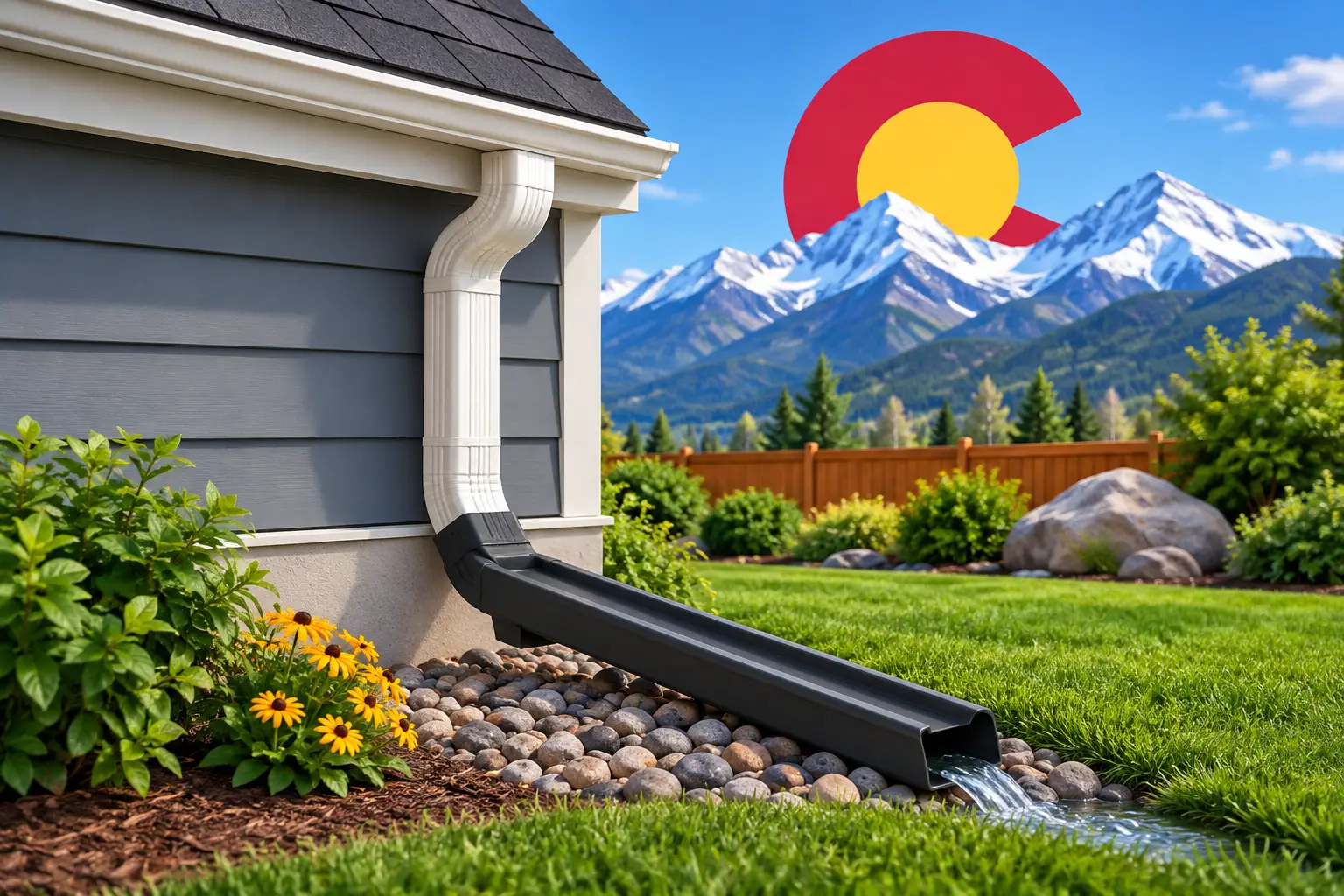
A downspout that empties beside the foundation can put hundreds of gallons of water in the wrong place during a single Colorado storm. To install downspout extensions properly, you need more than a piece of tubing at the bottom of the gutter. The extension needs to carry water far enough away, stay connected in wind and snow, and discharge where water can soak in or continue safely downhill.
For Fort Collins-area homeowners, this small gutter detail matters. Heavy rain, spring runoff, fast snowmelt, and freeze-thaw cycles can all expose weak drainage around a house. Proper extensions help protect your foundation, basement, siding, walkways, and landscaping from unnecessary water damage.
Start With the Right Drainage Goal
The purpose of a downspout extension is straightforward: move roof runoff away from the home without creating a new problem elsewhere. In most cases, the water should discharge at least 4 to 6 feet from the foundation. If the yard is flat, the soil drains slowly, or you have had water in a basement or crawlspace, extending it 8 to 10 feet may be the better choice.
Distance is only part of the equation. The discharge point should slope away from the house so water keeps moving after it leaves the extension. If the end of the extension sits in a low spot, beside a retaining wall, or in a mulch bed that holds water, runoff can still find its way back toward the foundation.
Look at the full path of the water before buying materials. You do not want to send runoff onto a driveway where it can freeze, across a neighbor's property, or toward a patio where it creates standing water. A good drainage plan works with the grade of your property instead of fighting it.
Choose an Extension That Fits Your Property
There is no single downspout extension that works for every home. The right choice depends on the downspout size, yard layout, local weather, and how often the area needs to be mowed, walked through, or cleared of snow.
Flexible Extensions
Flexible plastic extensions are inexpensive and easy to route around garden beds or corners. They can be a reasonable short-term option when the discharge path is curved or when you need a simple fix quickly. Their downside is durability. Thin flexible material can crack in cold weather, collect debris in low spots, and pull loose during high winds.
If you use a flexible extension, avoid stretching it tightly across a busy part of the yard. Support it where needed and check it after storms. A loose, crushed, or disconnected extension does not protect the foundation.
Rigid Aluminum or Vinyl Extensions
Rigid extensions usually provide a cleaner, longer-lasting installation. They are available in shapes and sizes that match common downspouts, and they maintain a smoother path for water flow. Aluminum is a dependable choice for many homes because it is lightweight, resists rust, and can be fastened securely.
A rigid extension is especially useful when the downspout runs along a side yard or another visible area. With proper elbows and a matching finish, it can look like part of the original gutter system instead of an afterthought.
Buried Drain Lines
A buried drain line can keep extensions out of sight and reduce mowing obstacles, but it requires more planning. The pipe needs a continuous slope, a protected outlet, and a route that will not become blocked by soil, roots, or ice. Water should never be sent into a buried pipe with nowhere reliable to drain.
Before connecting to an existing underground line, test it. Run water through the system and confirm it exits freely at a safe location. If it backs up, the downspout can overflow and cause problems at the roofline and foundation. Buried drainage is often worth having a gutter professional evaluate, particularly on properties with complicated grades or recurring water issues.
How to Install Downspout Extensions Properly
Begin by checking the downspout itself. It should be firmly attached to the gutter outlet and wall, with straps holding it in place. If it is bent, split, or leaking at seams, correct those problems before adding an extension. An extension cannot make up for a downspout that is already failing.
Measure the opening at the bottom of the downspout. Common residential sizes include 2-by-3-inch and 3-by-4-inch rectangular downspouts, but measuring prevents a frustrating mismatch at the hardware store. Choose an extension and elbow that fit the existing material, or use an appropriate adapter.
Attach an elbow if the extension needs to turn away from the house. Position it so the extension begins with a gentle downward pitch. Water does not need a steep slope, but it should not have to travel uphill or through a sagging section. A small drop over the length of the extension helps keep water moving and reduces debris buildup.
Slide the extension over or into the elbow as designed by the manufacturer, then secure the connection with outdoor-rated sheet-metal screws or the recommended fasteners. Place screws where they will not obstruct water flow. Two screws at a joint are often more secure than one, especially in windy locations.
Set the discharge end at least 4 to 6 feet from the foundation, with the opening pointed away from the home. If the outlet rests on soil, consider a splash block, drain pad, or gravel bed to reduce erosion. Make sure the final section is stable. An extension that shifts every time the lawn is mowed will eventually loosen or crack.
Once installed, test the system with a hose. Start at the gutter or run water into the downspout from a ladder only if you can do so safely. Watch every connection, confirm water does not pool near the foundation, and check whether the extension stays in place under a strong flow. This simple test can reveal a poor slope, loose seam, or blocked section before the next hard rain does.
Avoid the Common Installation Mistakes
The most common mistake is stopping too close to the house. A short splash block may reduce soil erosion directly below the downspout, but it will not solve a drainage problem if water continues to collect within a few feet of the foundation.
Another issue is directing water onto concrete. Runoff that crosses a sidewalk, entry, or driveway can become a slipping hazard and may create dangerous ice during Northern Colorado winters. Redirect the flow into a properly graded landscape area whenever possible.
Homeowners also sometimes bury an extension without accounting for cleanouts or maintenance. Leaves, shingle grit, and windblown debris can eventually enter any drainage system. If a buried line cannot be inspected or flushed, a minor clog can become difficult to find and costly to repair.
Finally, do not overlook the gutters above the extension. Clogged gutters, loose hangers, sagging sections, and overflowing corners can dump water near the foundation regardless of how well the extension is installed. Gutter guards can reduce routine debris buildup, but they still need occasional checks to make sure water is flowing where it should.
When an Extension Is Not Enough
Downspout extensions are effective for many homes, but they are not a cure-all. If water still pools near the house after you extend the downspouts, the yard may need regrading. A properly graded landscape should generally drop away from the foundation, helping surface water move outward rather than collect against the home.
You may also have a larger gutter problem if water spills over the front of the gutter during rain. The system could be clogged, undersized, pitched incorrectly, or damaged by wind, snow, or hail. In that situation, adding an extension treats the symptom at ground level while the source of the problem remains at the roof edge.
A professional gutter inspection is a smart next step when you notice basement moisture, soil washout, recurring ice near walkways, or water stains on siding. The right solution may be a simple repair, a longer extension, improved gutter capacity, or a better drainage route for the property.
Rocky Top Total Roofing helps homeowners address gutter and drainage concerns with practical recommendations and fair, honest pricing. A well-secured downspout extension is a small investment, but when the next storm sends water off your roof, it can make a real difference in how well your home is protected.