
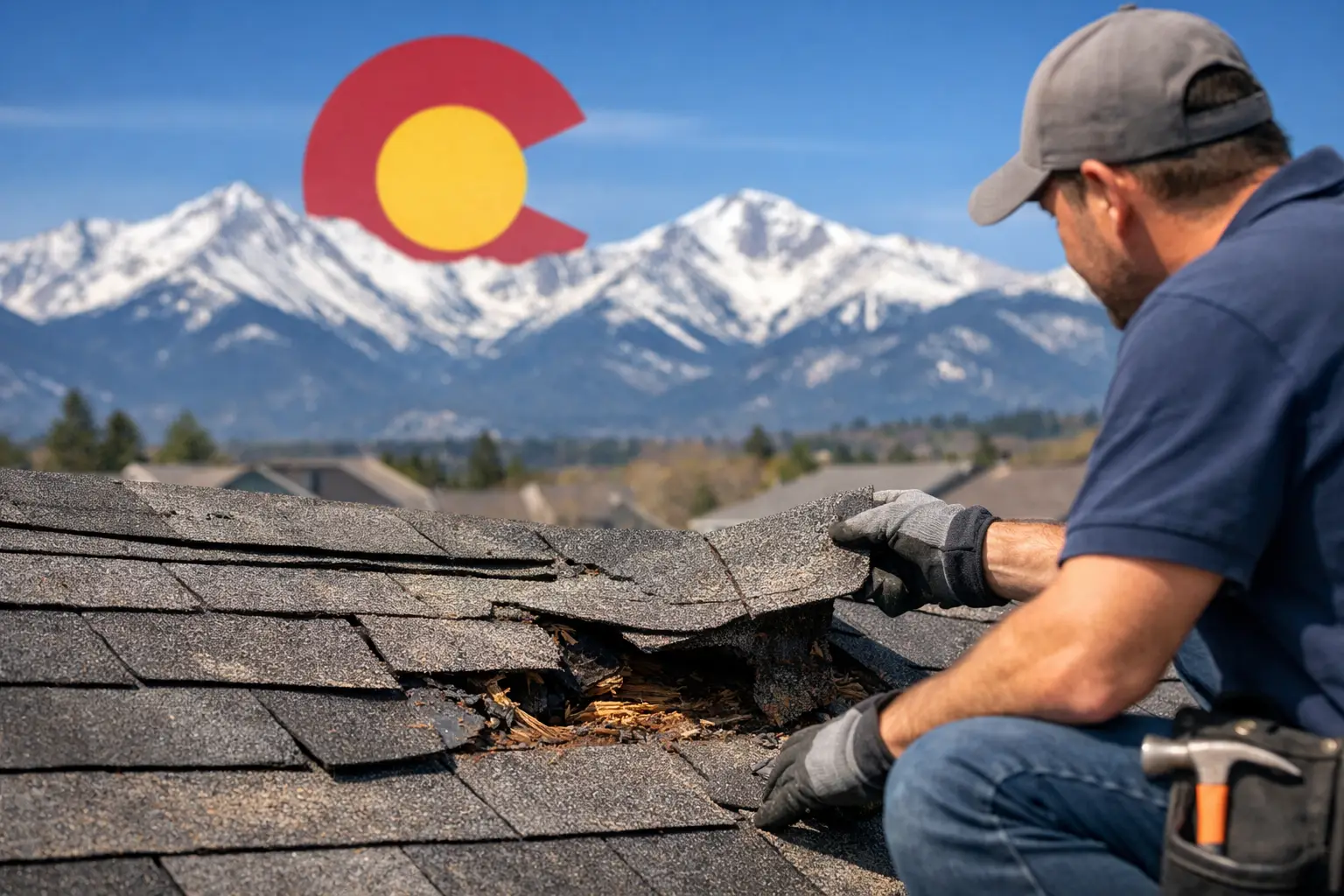
A roof rarely fails all at once. More often, it gives you a series of warnings – some obvious, some easy to miss until water starts showing up where it should not. If you have been wondering about the signs your roof needs replacement, the goal is not to panic. It is to catch the problem early enough to protect your home, your budget, and everything under that roof.
In Northern Colorado, roofs take a beating. Hail, high winds, snow, strong sun, and fast temperature swings all shorten a roof’s lifespan. That means a roof that looks mostly fine from the ground can still have enough damage to justify more than a simple repair. The question is not just whether your roof has a problem. It is whether that problem is isolated or whether the whole system is wearing out.
Signs your roof needs replacement instead of another repair
Some roofing issues are repairable and worth fixing. A few missing shingles after a windstorm, a small flashing problem around a vent, or limited damage in one section can often be handled without replacing the entire roof. But there comes a point when repeated repairs stop making financial sense.
If the same roof keeps leaking in different places, if the shingles are deteriorating across large areas, or if storm damage has affected more than one slope, replacement is usually the smarter move. You are not just paying for materials at that stage. You are paying again and again for labor, patchwork fixes, and the risk that hidden damage is still spreading beneath the surface.
Age matters too. Even a roof with no dramatic failure can be near the end of its useful life. Once that happens, every new repair becomes a short-term answer.
1. Your roof is near or past its expected lifespan
One of the clearest signs your roof needs replacement is simple age. Most asphalt shingle roofs last around 20 to 30 years, depending on material quality, attic ventilation, installation, and weather exposure. In a place like Fort Collins, hail and wind can shorten that timeline.
If your roof is pushing the upper end of its lifespan, it deserves a serious inspection even if it is not actively leaking. Older roofs often have multiple weak points at once. The shingles may still be attached, but they can be brittle, loosened, or no longer sealing properly.
This is where homeowners sometimes get stuck. They do not see a major problem, so they assume the roof is fine. But age alone changes the conversation from repair to replacement, especially if other warning signs are showing up too.
2. Shingles are curling, cracking, or going missing
Shingles are your roof’s first line of defense. When they start curling at the edges, cracking through the surface, or blowing off during wind events, that protection is breaking down.
A few missing shingles can sometimes be replaced. Widespread shingle failure is different. If the roof has bare spots, uneven wear, or shingles that no longer lie flat, water can work its way underneath. Once that happens, the damage is not limited to the outer layer.
Cracking and curling usually point to aging and weather fatigue, not just one isolated event. When the problem is spread across the roof, replacement is usually the better long-term investment.
3. You are finding granules in gutters or downspouts
Asphalt shingles shed granules over time, but heavy granule loss is a red flag. Those granules protect shingles from UV exposure and help them hold up against the elements. When they start coming off in large amounts, the shingles wear down faster.
You may notice a sand-like buildup in your gutters or at the bottom of downspouts. You may also see dark or shiny patches on the roof where granules are missing. On an older roof, that often means the shingles are nearing the end.
Granule loss does not always mean you need a full replacement that day. But if it is widespread and paired with age or storm damage, it is a strong sign the roof is losing its ability to do its job.
Interior warning signs your roof needs replacement
Not every roofing problem shows itself outside first. Some of the most expensive issues start quietly inside the home.
4. You have leaks, water stains, or attic moisture
A brown spot on a ceiling is never something to ignore. Neither is peeling paint, damp insulation, moldy smells in the attic, or moisture around roof penetrations. Water intrusion can come from damaged shingles, failed flashing, underlayment issues, or storm damage you cannot see from the ground.
One leak does not automatically mean full replacement. But multiple leaks, recurring leaks, or widespread moisture usually mean the roofing system is compromised in more than one place. By then, the question is not just about stopping water. It is about checking for damage to decking, insulation, and ventilation components too.
A roof can also leak in one spot while the actual failure is somewhere else. That is why a professional inspection matters. Guesswork usually leads to temporary fixes.
5. Sunlight is visible through the attic boards
If you can see daylight coming through the roof boards in your attic, outside moisture can come through too. This points to openings in the roofing system that should not be there.
Sometimes the issue is limited and repairable. Other times, it is a sign that the roof assembly has aged enough that weak points are developing in several areas. If daylight is paired with water stains, sagging, or an older roof, replacement becomes much more likely.
6. Energy bills are climbing without another clear cause
A failing roof does not just let water in. It can also affect ventilation and insulation performance. If your heating and cooling bills have jumped and nothing else has changed, your roof system may be part of the problem.
Poor attic ventilation, moisture intrusion, and aging roofing materials can all make it harder for your home to regulate temperature. This sign is less obvious than a leak, but it can still point to a roof that is no longer performing the way it should.
Storm damage can change the answer fast
In Colorado, a roof can go from serviceable to replacement-worthy after one major storm.
7. Hail damage is spread across the roof
Hail damage is not always dramatic from the ground. You may not see holes or missing sections, but that does not mean the roof escaped cleanly. Hail can bruise shingles, knock off granules, crack matting, and weaken seals.
When damage is spread across multiple slopes, repairs may not restore the full integrity of the roof. That is especially true if the shingles are older or if matching materials are no longer available. In those cases, replacement often makes more sense both for protection and appearance.
For homeowners dealing with insurance, documentation matters. A thorough inspection can show whether the damage is cosmetic, functional, or serious enough to justify a claim.
8. Wind damage keeps coming back
High winds can lift shingles, break seals, and expose the roof to future leaks. Sometimes the damage is easy to spot. Other times, shingles are loosened but not fully torn off, which means the next storm finishes the job.
If your roof has already had several wind repairs, that pattern tells you something. Repeated wind damage often means the roof is aging, the shingle bond is weakening, or earlier wear has made the whole system more vulnerable. At a certain point, replacing the roof is more dependable than continuing to chase one loose section at a time.
9. The roofline is sagging or looks uneven
A sagging roof is a serious warning sign. It can point to trapped moisture, rotted decking, structural weakness, or long-term water damage beneath the shingles.
This is not a cosmetic issue. If part of the roofline dips or looks uneven, the roof should be inspected right away. Some sagging problems are limited to one area, but many require more extensive work than a standard repair. Waiting usually makes the repair scope larger and more expensive.
When repair still makes sense
Not every roofing problem calls for replacement. If the roof is relatively new, the damage is limited to one area, and the underlying structure is in good shape, repair may be the right call. Honest roofing advice means saying that when it is true.
But homeowners should be careful about choosing the cheapest short-term fix when the roof is already failing in several ways. A repair can be the right decision this season and the wrong decision six months later if the rest of the system is worn out. That is why a full inspection matters more than a quick glance.
A dependable contractor should be able to explain the trade-off clearly: what can be repaired, how long that repair is likely to last, and whether replacement would save money and stress over time.
What to do if you see these signs your roof needs replacement
Start with an inspection, not an assumption. A roof can look worse than it is, and it can also look better than it is. The only way to know the difference is to have the full system checked, including shingles, flashing, ventilation, decking condition, and storm-related damage.
If replacement is the right path, the process should not feel confusing. You should get a clear explanation of what was found, what materials make sense for your home, what local code requirements apply, and how insurance may fit into the picture if storm damage is involved. That straightforward approach is what homeowners deserve.
Rocky Top Total Roofing works with homeowners across Fort Collins who need honest answers about whether a roof can be repaired or whether it is time to replace it. Either way, the best next step is the same: act before a manageable issue turns into interior damage, mold, or structural repairs.
A good roof protects more than shingles and decking. It protects your time, your budget, and the confidence that your home is ready for the next storm.