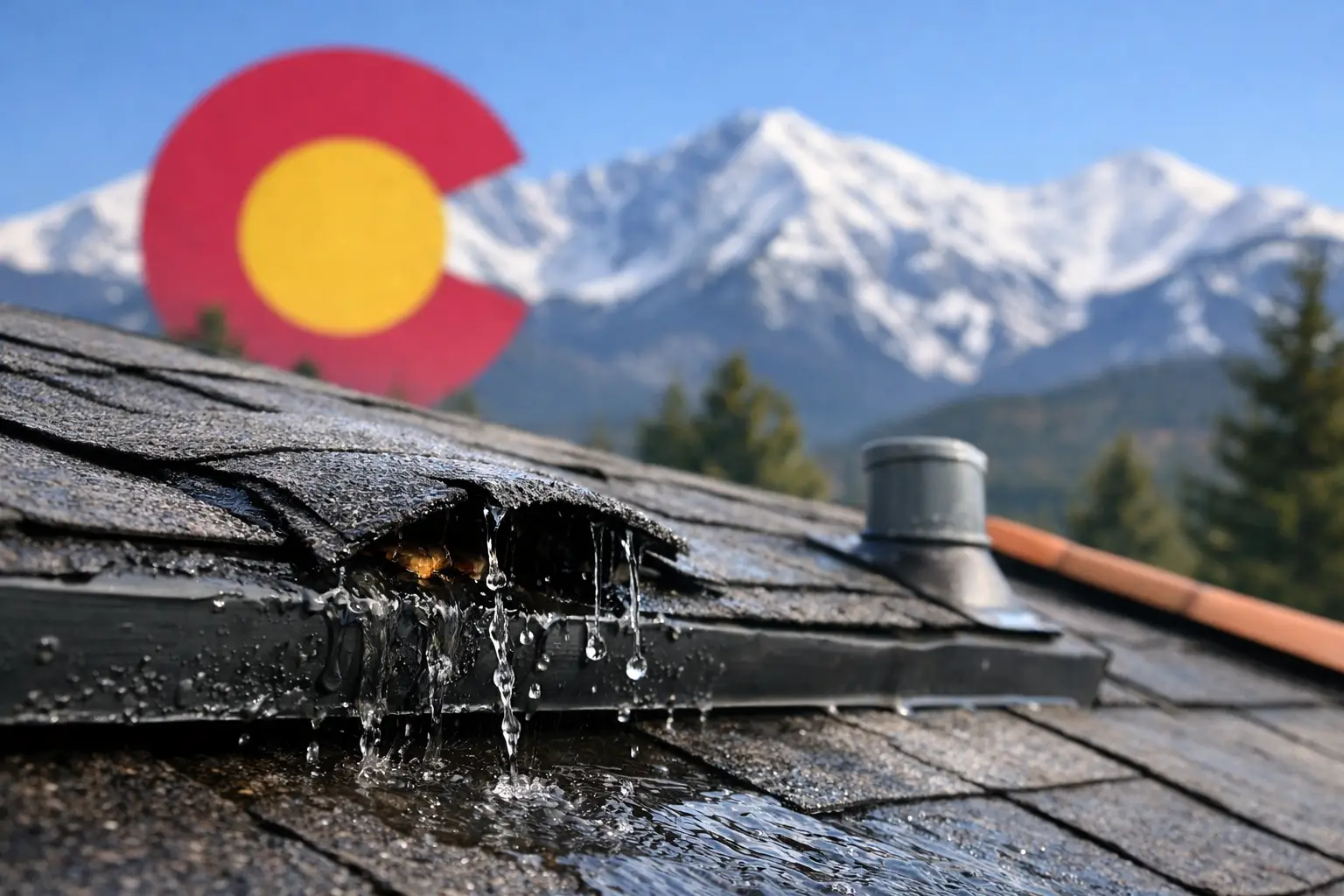
A roof leak rarely starts with a dramatic ceiling collapse. More often, it begins as a faint water stain near a vent, a damp spot in the attic after a spring storm, or shingles that look slightly out of place from the ground. Knowing the top causes of roof leaks can help Fort Collins property owners act before a small repair turns into damaged insulation, mold growth, rotted decking, or an insurance claim.
Northern Colorado roofs take a beating. Hail, wind, heavy snow, rapid temperature swings, and intense sun all put stress on roofing materials and the areas where the roof meets vents, walls, skylights, and gutters. The source of a leak is not always directly above the water spot, either. Water can travel along roof decking, rafters, or insulation before it becomes visible inside.
Top Causes of Roof Leaks Homeowners Should Know
Damaged or Missing Shingles
Shingles are the roof’s first line of defense against rain, snow, and wind-driven moisture. When shingles crack, curl, lose granules, lift at the edges, or blow off entirely, water can reach the underlayment and roof deck below.
Wind damage is common after strong Front Range storms, especially around roof edges, ridges, and sections exposed to prevailing winds. A few missing shingles may not look urgent, but the exposed area can allow water in during the next storm. Asphalt shingles can also become brittle with age, making them more likely to crack when temperatures change quickly.
Hail deserves special attention. It can bruise shingles, knock away protective granules, and shorten the life of a roof even when there is no obvious hole. A professional inspection after a
significant hailstorm can identify damage that is easy to miss from the ground.
Failed Flashing Around Roof Openings
Flashing is the metal material installed around areas where the roof is interrupted or changes direction. It protects roof valleys, chimneys, skylights, plumbing vents, dormers, and wall intersections. When flashing is loose, rusted, improperly installed, or sealed with failing caulk, water has a direct path into the roof system.
This is one of the most common reasons a relatively new roof can still leak. Roofing materials may be in good shape, while a small gap around a vent pipe or chimney lets in water during a hard rain. Flashing repairs are often straightforward when caught early. Waiting can allow moisture to damage the decking and framing around the opening.
Worn Pipe Boots and Vent Seals
Most homes have plumbing vent pipes that extend through the roof. The rubber or synthetic boot around each pipe keeps water from slipping into the opening. Over time, sun exposure and temperature changes can cause these boots to crack, split, or pull away from the pipe.
A failed pipe boot can cause a leak that appears only during rain or melting snow. Because the damage is usually small and located high on the roof, it can go unnoticed until attic insulation is wet or a ceiling stain appears. Roof vents, turbine vents, and powered attic fans can develop similar issues when their seals or flashing fail.
Clogged Gutters and Poor Drainage
Gutters do more than keep water off walkways. They direct runoff away from roof edges, siding, foundations, and landscaping. When gutters are packed with leaves, pine needles, granules, or ice, water can back up beneath the shingles at the eaves.
In winter, ice dams can make this problem worse. Snow melts on the warmer upper part of the roof, then refreezes near the colder edge. As more meltwater builds behind that ice, it can work under shingles and enter the home. Gutters alone do not cause every ice dam, since attic insulation and ventilation play a role, but clean, properly functioning gutters support better drainage.
Overflowing gutters can also point to poor gutter pitch, undersized downspouts, or sections that have pulled away from the fascia.
A gutter inspection is worth scheduling when you see standing water, sagging runs, or water spilling over the sides during normal rainfall.
Roof Valleys That Have Been Compromised
A roof valley is where two roof slopes meet. It channels a large volume of water toward the gutters, which makes it one of the most vulnerable areas on the roof. Valley leaks can happen when shingles are damaged, sealant has failed, debris has collected, or the valley flashing was installed incorrectly.
Because valleys handle so much runoff, even a small opening can become a serious leak during heavy rain or snowmelt. Homeowners should never walk a steep or wet roof to inspect a valley. If you notice stains near a sloped ceiling, especially after storms, a qualified roofer can inspect the area safely and determine whether a repair or replacement is needed.
Skylight, Chimney, and Wall Intersection Problems
Skylights bring natural light into a home, but they must be installed and flashed correctly. A leak near a skylight does not always mean the skylight itself has failed. The issue may be cracked glazing, deteriorated seals, blocked drainage channels, or damaged flashing around the unit.
Chimneys and roof-to-wall connections have the same challenge: they create transitions where water must be directed away from the opening. Mortar cracks, missing counterflashing, loose siding, and failed sealants can all contribute to leaks. These areas require careful repair work, not a quick layer of caulk. Caulk may be part of the solution, but it cannot replace proper flashing and water management.
Aging Materials and Past Repair Mistakes
Every roof has a service life. As shingles age, they lose flexibility and protective granules. Underlayment can deteriorate. Nails may back out, and sealant strips may no longer bond as they should. An older roof is more vulnerable to leaks even if it has not suffered obvious storm damage.
Past repairs can also create trouble. Roofing over damaged materials, using mismatched shingles, improperly fastening replacement shingles, or relying on roof cement as a permanent fix can leave weak spots behind. A repair should address why water entered, not simply cover the visible symptom.
How to Tell When a Leak Needs Immediate Attention
Some warning signs call for a prompt roof inspection: active dripping, a growing ceiling stain, wet attic insulation, peeling paint near the ceiling, a musty odor, or shingles and flashing visible on the ground after a storm. Commercial property owners should also watch for ponding water on low-slope roofs, interior leaks near drains, and bubbling roof membranes.
It depends on the cause, but delaying a leak repair is rarely the cost-saving choice. Water damage spreads quietly. What begins as a loose shingle or cracked vent boot can affect decking, insulation, drywall, electrical components, and structural wood if moisture remains trapped.
If water is actively entering the home, move belongings away from the area, place a container under the drip if it is safe to do so, and avoid climbing onto the roof. Do not puncture a bulging ceiling unless a trained professional advises you to do so. The safest next step is to document what you see and
arrange an inspection.
Why a Professional Roof Inspection Matters
Roof leaks are not always visible from the ground, and the obvious suspect is not always the true source. A thorough inspection looks at shingles, flashing, penetrations, valleys, roof edges, attic conditions, ventilation, and gutter drainage. It also helps separate storm-related damage from normal aging and installation issues.
For Fort Collins homeowners, local experience matters because roof repairs need to stand up to Colorado weather and meet applicable building requirements. Rocky Top Total Roofing provides straightforward inspections and clear recommendations, whether the right answer is a targeted repair, gutter work, storm damage documentation, or a full roof replacement.
A dry ceiling does not always mean the problem is gone. After the next hailstorm, wind event, or stretch of melting snow, take a few minutes to check your attic and roofline. Catching a small issue early gives you more repair options, better protection for your property, and far less stress when the weather turns.