
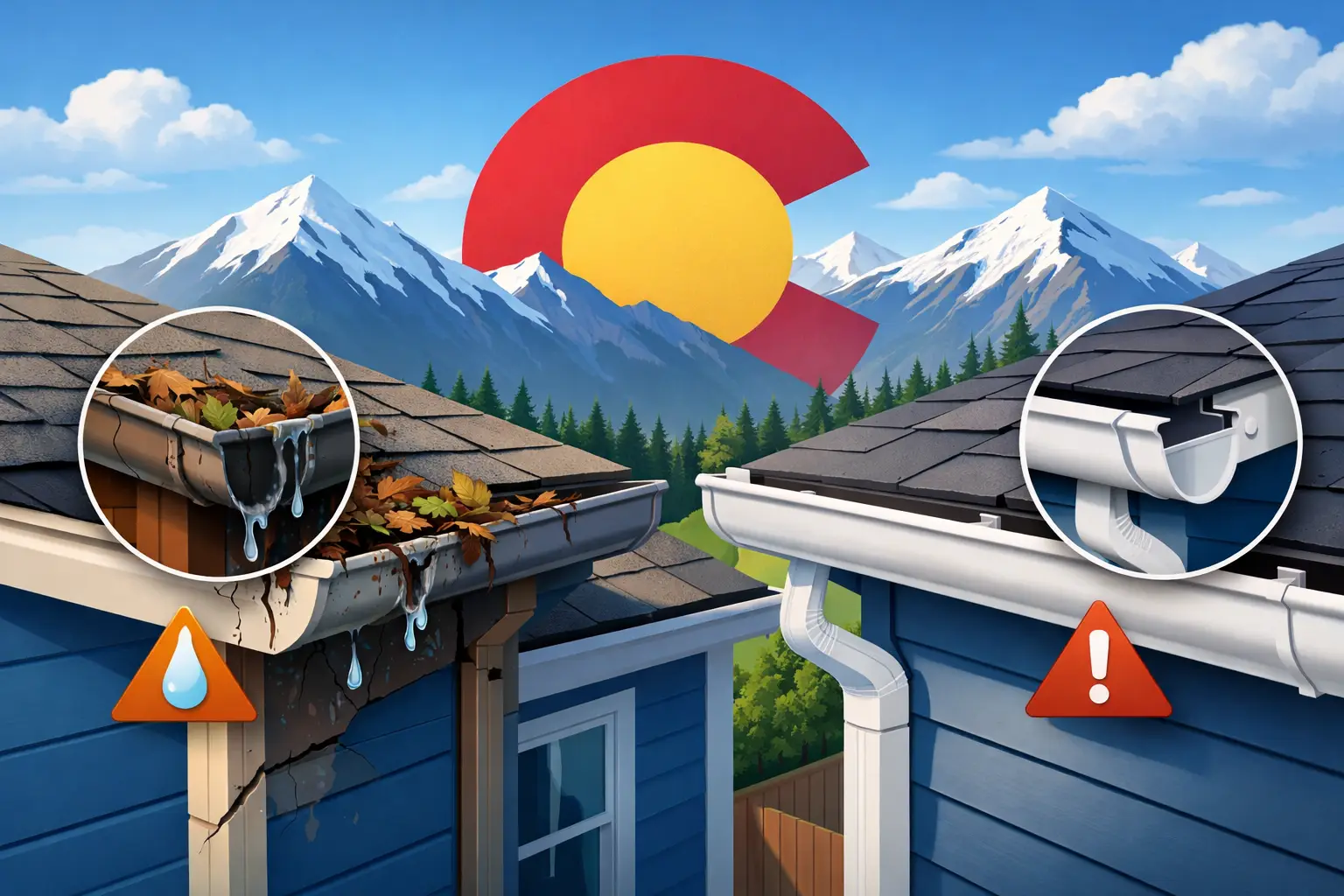
A gutter can look like a minor part of the house until the next hard rain sends water over the edge, down the siding, and toward the foundation. So, when should gutters be replaced? The answer is usually not based on age alone. Visible damage, repeated leaks, poor drainage, and the condition of the fascia behind the gutter all tell a clearer story.
For homeowners in Fort Collins and across Northern Colorado, gutters take a beating from hail, heavy snow, high winds, sun exposure, and rapid freeze-thaw cycles. Catching a gutter problem early can mean a targeted repair. Waiting too long can lead to damaged trim, stained siding, soil erosion, basement moisture, or roof-edge repairs that cost far more than the gutter work itself.
How Long Do Gutters Usually Last?
Well-installed aluminum gutters commonly last about 20 years, and sometimes longer with regular cleaning and prompt repairs. Steel gutters may need replacement sooner if their protective coating fails and rust takes hold. Copper can last for decades, but it is a different investment and still needs properly designed drainage.
Those ranges are helpful, but they are not a deadline. A 10-year-old system damaged by hail or pulled loose by ice can be a replacement candidate. On the other hand, a 25-year-old gutter that is structurally sound, drains correctly, and has only one leaking seam may be worth repairing.
The better question is whether the system still moves water away from your roofline and foundation without creating new problems. A professional inspection can separate a repairable issue from a system that has reached the end of its useful life.
When Should Gutters Be Replaced Instead of Repaired?
A small leak at one seam, a loose hanger, or a short section damaged by a fallen branch does not automatically call for all-new gutters. Those issues can often be fixed when the rest of the system is straight, secure, and properly pitched.
Replacement makes more sense when repairs are becoming routine or when the gutter’s basic shape and attachment have failed. A patch can stop water temporarily, but it cannot correct a gutter that is undersized, bent along several runs, or pulling away from deteriorated fascia.
Water spills over even when gutters are clean
Overflow is sometimes a simple maintenance issue. Leaves, roof grit, and shingle granules can block the channel or downspout. If the gutters have been cleaned and water still spills over the front during ordinary rain, the slope may be wrong, the outlet may be too small, or the gutters may not have enough capacity for the roof area.
This is especially common where a large roof plane sends water into one short section of gutter. Replacing that run with properly sized materials and correctly placed downspouts can solve a problem that cleaning never will.
Seams keep leaking or patches keep failing
Sectional gutters have joints, and joints are common leak points. One failed seam can often be resealed. Several failing seams, repeated caulking, or visible separation between sections usually means the system is aging out.
Seamless gutters reduce the number of joints along each run, which gives water fewer places to escape. They still have corners and outlet connections that require care, but they are often a practical replacement choice for a home with recurring seam leaks.
The gutters sag, pull away, or hold standing water
A gutter should sit securely against the fascia and carry water toward the downspout. If it bows between hangers, leans away from the home, or holds water days after a storm, the system is not performing as it should.
Standing water adds weight and accelerates corrosion. In winter, that water can freeze, expand, and place even more stress on hangers and fasteners. Refastening a limited area may be enough when the gutter itself is in good condition. If the metal is warped, the hangers repeatedly pull loose, or the fascia is soft from moisture damage, replacement and underlying repair are often the honest solution.
Cracks, holes, rust, and dents are spreading
Tiny holes or a single crack might be repairable. Multiple cracks, widespread rust, or long areas of dented metal are different. They signal that the gutter has lost strength or is no longer directing water consistently.
Hail can leave obvious dents in aluminum, but appearance is not the only concern. An inspection should check whether impacts changed the gutter pitch, loosened connections, damaged end caps, or affected downspouts. If storm damage involves both the roof and gutter system, clear documentation can also be useful when working through an insurance claim.
Paint is peeling and siding or trim is showing water damage
Peeling paint near the roof edge is not always a gutter problem, but it deserves attention. Water running behind a loose gutter can soak fascia boards, rot trim, and leave staining on siding. Dark streaks beneath a gutter, mildew near the eaves, or soft wood at the roofline are signs that water has been traveling where it should not.
Replacing the gutter without correcting damaged fascia or improper flashing can leave the root issue behind. The work should address the entire water-management path, from the roof edge to the downspout discharge area.
Signs at Ground Level Matter Too
You do not need a ladder to spot many gutter failures. Walk around the home after a steady rain and look at where water lands. Downspouts should carry water away from the foundation, not dump it directly beside the wall.
Watch for washed-out mulch, trenches in the soil, puddles near the foundation, or water stains at the bottom of siding. These are not cosmetic details. Consistent water around the foundation can create moisture problems inside the home and make exterior maintenance more expensive over time.
Also look for gutters that terminate above walkways or driveways without proper drainage control. In Northern Colorado winters, runoff that refreezes in these areas can create a slip hazard. Extending or rerouting a downspout may solve the issue, but if the whole system is poorly planned, replacement may be the more durable choice.
Consider Replacement During Other Exterior Work
Gutter replacement is often easiest when roof repairs or a roof replacement are already underway. The crew can inspect the roof edge, flashing, fascia, and drainage layout at the same time. This helps prevent a new roof from shedding water into an old gutter system that is too damaged or too small to handle it.
That does not mean gutters must be replaced with every roof project. If the existing gutters are secure, correctly sized, and free of significant damage, keeping them can be reasonable. The decision should come from their condition, not a one-size-fits-all sales pitch.
If you are replacing gutters, it is also a good time to consider gutter guards. Guards can reduce leaf buildup and make cleaning less frequent, but they are not a substitute for correct pitch, secure fastening, or adequate downspout capacity. The right option depends on the trees around the home, roof debris, and how easily the system can be maintained.
What a Professional Gutter Inspection Should Check
A proper inspection looks beyond a quick glance from the driveway. It should review the gutter slope, hanger spacing, seams, end caps, downspouts, outlet locations, fascia condition, and how water drains at ground level. The roof edge should also be checked for signs that runoff is getting behind the gutter.
Rocky Top Total Roofing can assess whether a focused repair will restore performance or whether replacement will better protect your home. You should receive a clear explanation of what is damaged, what work is recommended, and why. Fair, honest pricing starts with identifying the actual problem instead of treating every leak as a full replacement.
A gutter issue rarely improves on its own. If you are seeing overflow, sagging, repeated leaks, or water collecting near the foundation, schedule an inspection before the next major storm turns a manageable repair into damage to your home.