
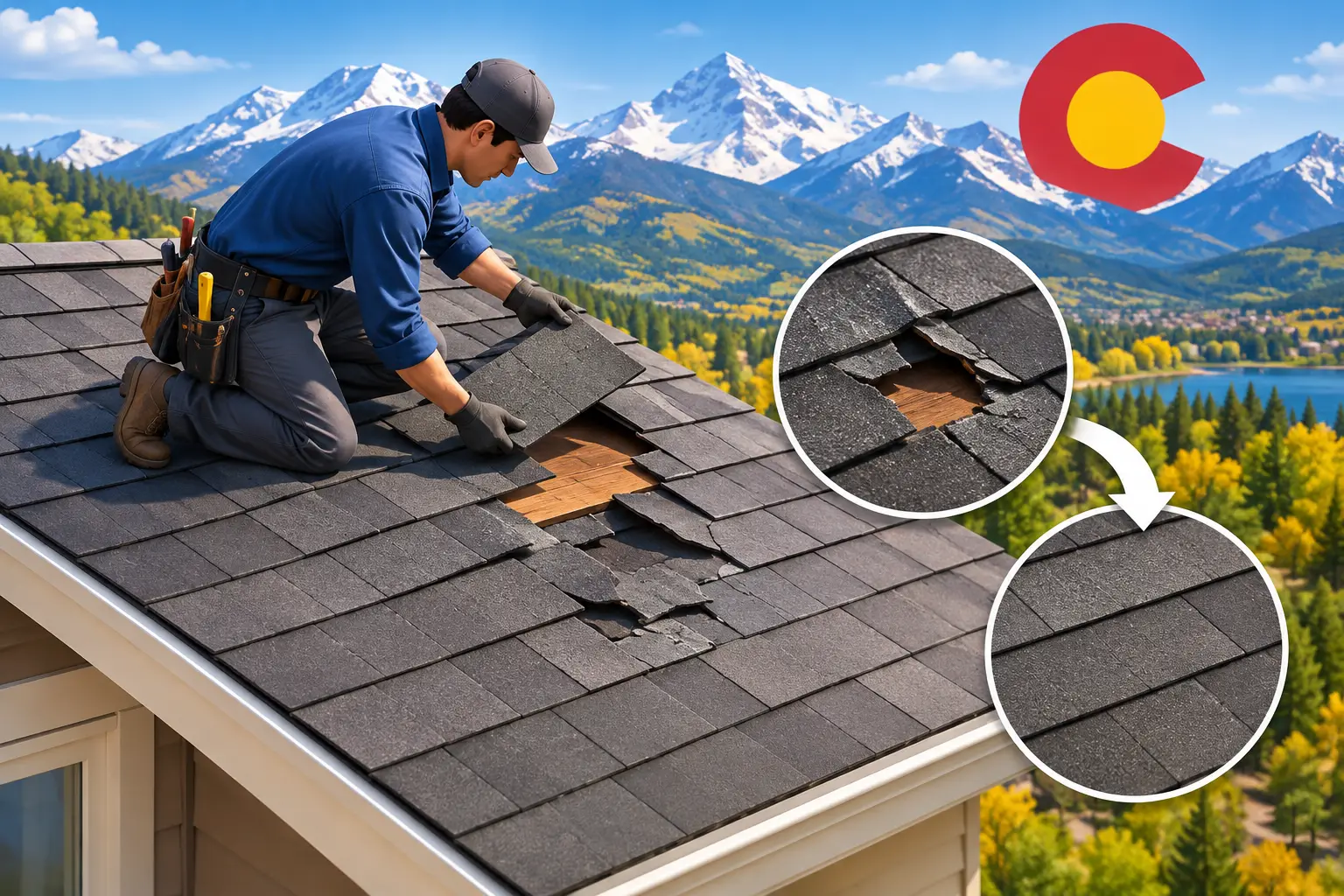
A wind damaged shingle repair example is often more useful than a list of warning signs because it shows what can be happening beneath a roof that looks mostly intact from the ground. After a hard Northern Colorado windstorm, a few lifted or missing shingles can expose the roof to water long before a ceiling stain appears. The right repair is not simply replacing what blew off. It starts with finding out why the shingles failed and whether the surrounding roof is still secure.
What Wind Damage Can Look Like on an Asphalt Roof
Wind does not always leave a dramatic bare patch on the roof. Sometimes it breaks the adhesive seal between shingles, lifts an edge, creases a tab, or pulls fasteners through the shingle. From the driveway, the roof may appear normal. Up close, a trained inspector may find shingles that no longer lie flat, exposed nail heads, cracked seal strips, or granule loss where the shingle repeatedly flexed in the wind.
The location of the damage matters. Roof edges, ridges, hips, valleys, and areas around vents tend to take more wind pressure than the center of a roof plane. A missing shingle near a ridge may be easy to spot. A lifted shingle along the eave can be just as serious because wind-driven rain can get underneath it.
Age also changes the repair decision. Newer shingles may reseal after a minor lift if they were not creased or torn. Older shingles can become brittle, making a small repair more delicate and increasing the chance that nearby shingles crack during the work. That does not automatically mean replacement is needed, but it does mean the roof deserves a careful assessment instead of a quick patch.
A Wind Damaged Shingle Repair Example From Inspection to Finish
Consider a typical one-story home after a strong spring windstorm. The homeowner notices three shingles in the yard and a dark strip near the back roof edge. There is no active interior leak, but waiting for one would be a costly gamble.
During the inspection, the roofer finds four missing shingles on the rear slope and several more with creased tabs. The wind has also lifted a row of shingles above the missing section. Underneath, the roof deck is dry and solid. The underlayment is intact except for a small torn area, and there is no evidence of long-term moisture damage in the attic.
This is a repairable situation. The affected shingles are removed without disturbing more of the roof than necessary. The roofer replaces the torn underlayment, installs properly matched replacement shingles, and fastens them according to manufacturer requirements. Nearby lifted shingles are checked individually. Shingles that are still flexible and uncreased may be reset and hand-sealed where appropriate; creased or damaged pieces are replaced rather than pressed back down and hoped for the best.
The crew also checks the ridge cap, pipe boots, flashing, and gutters. Wind damage rarely follows a neat line. A loose ridge cap or bent flashing edge can create a separate entry point for rain, while a gutter pulled loose from the fascia can affect drainage and create another repair need.
At the end of the job, the repaired area should lie flat, shed water properly, and blend as closely as possible with the existing roof. Exact color matching depends on the age and weathering of the original shingles. A reputable contractor will be straightforward about that. A sound repair is the priority, even if a close inspection reveals a slight shade difference.
Why Replacing Only the Missing Shingles Is Not Enough
The visible shingles are only part of the story. When wind tears out a shingle, it can damage the layer beneath it or loosen the shingles above it. If a contractor replaces only the obvious missing pieces, the roof may still have openings hidden under lifted tabs.
The repair should answer several practical questions: Is the decking dry and structurally sound? Has the underlayment been torn? Are the surrounding shingles creased, unsealed, or missing fasteners? Is flashing still tight at roof penetrations and wall intersections? These checks take a little more time, but they are what separate a dependable roof repair from a temporary cosmetic fix.
This is also why homeowners should be cautious about using caulk as the primary answer to wind damage. Roofing sealant has a place for specific details, but it cannot restore a torn shingle, replace missing material, or correct a damaged underlayment layer. A thick line of sealant may hide a problem briefly while trapping debris and making a proper repair harder later.
When a Repair Makes Sense and When It May Not
A focused repair is often the best value when wind damage is limited to a small area, the roof is otherwise in good condition, and matching shingles are available. It protects the home without asking the owner to replace a system that still has useful life left.
Replacement may be the better path when damage is widespread, shingles are brittle throughout the roof, leaks have affected the deck, or the roof is already near the end of its service life. A roof can also have enough wind damage across multiple slopes that a collection of isolated repairs becomes less reliable and less cost-effective than a full replacement.
Insurance can be part of the picture after a qualifying storm, especially if the damage is sudden and widespread. Documentation matters. Clear photos, a detailed inspection, and an honest scope of work help support the conversation with the insurance carrier. Rocky Top Total Roofing can help property owners understand the findings and provide the information needed for a claim without promising an outcome the carrier has not approved.
What Homeowners Should Do After High Winds
Start with a safe ground-level look. Check for shingles, ridge-cap pieces, metal flashing, or gutter parts in the yard. Look for areas of the roof that appear uneven, dark, or bare. Inside, check upper ceilings, attic spaces, and around exterior walls for moisture, staining, or a musty smell.
Do not climb onto a steep or storm-damaged roof to investigate. Shingles can be slippery, loose, or weakened, and a lifted edge can catch a foot unexpectedly. Avoid pulling on loose materials from a ladder as well. A small movement can turn limited damage into a larger opening.
If water is entering the home, move belongings away from the area, place a container under active drips, and arrange for prompt professional help. If there is no active leak, schedule an inspection soon rather than waiting for the next rainstorm. Wind damage has a way of becoming more expensive when it is left exposed through changing weather.
A Good Repair Protects More Than One Stormy Day
The best wind repair does not just make the roof look whole again. It restores the layers that direct water away from the home, secures vulnerable edges, and confirms that the surrounding shingles can still do their job. That careful approach gives homeowners a clear answer: repair what is truly damaged, address what may fail next, and avoid paying for work the roof does not need.
If your roof has been through a hard wind event, a straightforward inspection can replace uncertainty with a practical plan. Taking care of a few damaged shingles now may be what keeps the next Colorado rain from becoming an indoor problem.