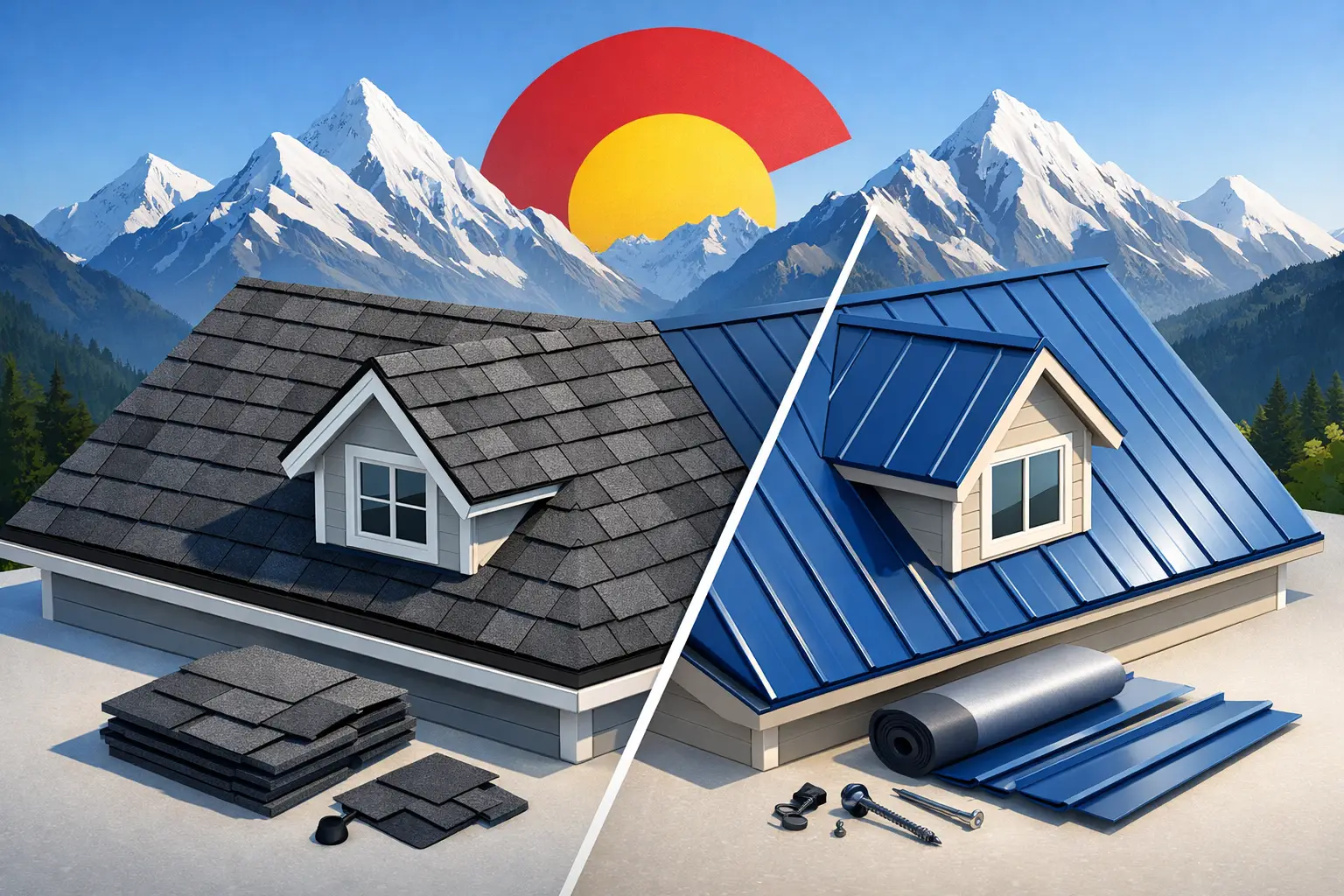
A roof replacement after a Northern Colorado hailstorm can put homeowners in a tough spot: replace what was there with asphalt shingles, or use the opportunity to upgrade to metal. When comparing asphalt shingles vs metal roofing, the right answer is not always the material with the longest lifespan. Your budget, roof design, insurance situation, neighborhood style, and plans for the home all matter.
Both materials can protect a home well when they are installed correctly. The better choice is the one that fits the condition of your roof and gives you confidence when the next round of wind, snow, or hail moves through Fort Collins.
Start With Your Roof, Not the Sales Pitch
A new roof is a major investment, but it should solve a real problem. If your roof has active leaks, missing shingles, hail impacts, aging materials, or storm-related damage, an inspection should come before choosing a replacement material. The decking, ventilation, flashing, valleys, gutters, and roof slope all affect what installation will make sense.
For example, a simple gable roof may be a good candidate for either shingles or metal. A roof with many valleys, dormers, skylights, and transitions can require more detailed metal fabrication and labor. That does not rule metal out, but it can change the price enough to make shingles the more practical option.
It is also worth separating a repairable roof from a roof that needs replacement. A few wind-damaged shingles or a small flashing issue may call for a targeted repair. A roof with widespread hail damage, failing materials, or repeated leaks often deserves a broader solution.
Asphalt Shingles vs Metal Roofing: Cost and Value
Upfront cost is usually the biggest difference between asphalt shingles and metal roofing. Architectural asphalt shingles generally have a lower installation cost, which makes them a familiar choice for homeowners replacing a roof after storm damage or working within a defined insurance settlement. They offer solid protection, a wide range of colors, and a look that works with many Northern Colorado homes.
Metal roofing typically costs more at installation. The final number depends on the type of metal, panel profile, roof complexity, trim details, and whether the existing roof must be removed. A properly installed metal roof can last much longer than a shingle roof, so some homeowners see value in paying more now to reduce the chance of another full replacement later.
That longer service life does not automatically make metal the best financial choice for every property. If you expect to sell within a few years, a quality architectural shingle roof may provide the protection and curb appeal you need without the higher initial expense. If this is your long-term home and you want a material built for decades of service, metal may deserve a closer look.
Insurance also deserves a realistic conversation. A policy may cover storm damage based on the age and condition of the existing roof, but it does not always pay the full difference for an upgraded material. Before making a decision, review your policy and get a clear estimate that separates covered work from any upgrade costs.
What to expect from asphalt shingles
Modern architectural shingles are not the thin, flat three-tab products many people remember. Quality architectural shingles add dimension and can provide strong wind resistance when installed with the right fastening pattern and accessories. Many options are available with impact-resistant ratings, which can be especially useful in hail-prone areas.
Shingles are also straightforward to repair in many cases. If a limited area is damaged, a contractor may be able to replace affected shingles and restore the roof’s protection. Matching the color can become more difficult as an older roof fades, but the repair process itself is generally familiar and cost-effective.
What to expect from metal roofing
Metal panels shed snow and rain efficiently and are highly resistant to fire. They are lightweight compared with many roofing materials, and their clean lines can suit everything from mountain properties to modern homes. A properly detailed metal roof can be an excellent long-term system.
Still, metal is not maintenance-free or damage-proof. Hail may leave cosmetic dents in some metal profiles, even when the roof remains watertight. Fasteners, sealants, penetrations, flashing, and panel details must be installed correctly because small mistakes can lead to leaks. Repairs also require a contractor who understands the specific panel system instead of treating it like a shingle roof.
Hail, Wind, Snow, and Colorado Weather
Northern Colorado roofs work hard. Strong sun, wide temperature swings, high winds, heavy snow, and hail can all shorten the life of a poorly installed or poorly maintained roof. The material matters, but the full roofing system matters just as much.
For hail resistance, do not assume metal always wins. Some metal roofs can dent under larger hailstones, while many premium asphalt shingles carry a Class 4 impact-resistance rating. Class 4 shingles are tested for impact performance, but they are not a guarantee that a storm will cause no damage. A thorough inspection after a significant storm is still the right move.
Wind performance depends heavily on installation. Shingles need proper nailing, starter materials, underlayment, and edge protection. Metal needs correct panel attachment, trim, closures, and flashing. Skipping these details to lower a bid can cost much more later.
Snow behavior is another practical consideration. Metal’s smooth surface can allow snow to slide off quickly, which may be helpful in some situations but can create a hazard over walkways, decks, driveways, or entries. Snow guards can manage that release, but they should be part of the design and budget from the start. Asphalt shingles tend to hold snow longer because their textured surface creates more friction.
Appearance, Noise, and Everyday Living
Asphalt shingles remain popular because they blend easily with traditional home styles. They are available in neutral blends, deep charcoal shades, warm browns, and other colors that can complement brick, siding, stone, and trim. A well-chosen shingle can refresh curb appeal without making the roof the center of attention.
Metal roofing offers a different look. Standing-seam panels provide a crisp, modern appearance, while some metal profiles offer a more traditional style. Color retention, panel width, and trim quality all influence the finished result. Ask to see actual installed examples, not just small samples, because sunlight and roof pitch can change how a color looks from the street.
Many homeowners worry that metal roofs will be loud in rain or hail. On a properly installed residential roof with decking, underlayment, attic insulation, and interior ceilings, the difference indoors is usually less dramatic than people expect. If noise is a concern, discuss the existing roof assembly before deciding.
When Asphalt Shingles Are the Better Fit
Asphalt shingles are often the better choice when keeping the replacement cost manageable is a priority, when the home needs a classic appearance, or when future repairs should be simple. They also make sense for homeowners who want impact-resistant options without moving to the cost of a metal system.
They are especially practical when an insurance claim is helping cover replacement of an existing shingle roof. In that situation, a quality architectural shingle installed with proper ventilation, flashing, and underlayment can provide dependable protection and strong value.
When Metal Roofing Is Worth Considering
Metal roofing is worth considering when you plan to stay in the home for many years, prefer its appearance, and are comfortable investing more upfront. It can be a strong fit for homeowners who want a long-lasting material, excellent fire resistance, and a roof designed to handle tough weather with fewer full replacements over time.
The key is to compare like for like. A low metal bid that skips necessary details is not a bargain, and a high shingle bid is not automatically better workmanship. Ask what materials are included, how penetrations and flashing will be handled, whether old roofing will be removed, and what workmanship coverage comes with the work.
Before choosing a color or signing an estimate, have your roof evaluated by a local contractor who can explain its condition in plain language. Rocky Top Total Roofing can help homeowners sort out storm damage, repair needs, insurance questions, and replacement options so the final decision is based on the home in front of you, not a one-size-fits-all pitch.