A roof can look perfectly fine from the yard while the layer beneath its shingles is doing most of the work during a hard rain, wind-driven snow, or sudden hailstorm. Synthetic underlayment is that secondary layer of protection, installed between the roof deck and the finished roofing material. For many Northern Colorado homes, it is a smart upgrade, but the product alone does not guarantee a better roof. Correct installation, proper flashing, and attention to local weather conditions matter just as much.
What Synthetic Underlayment Does
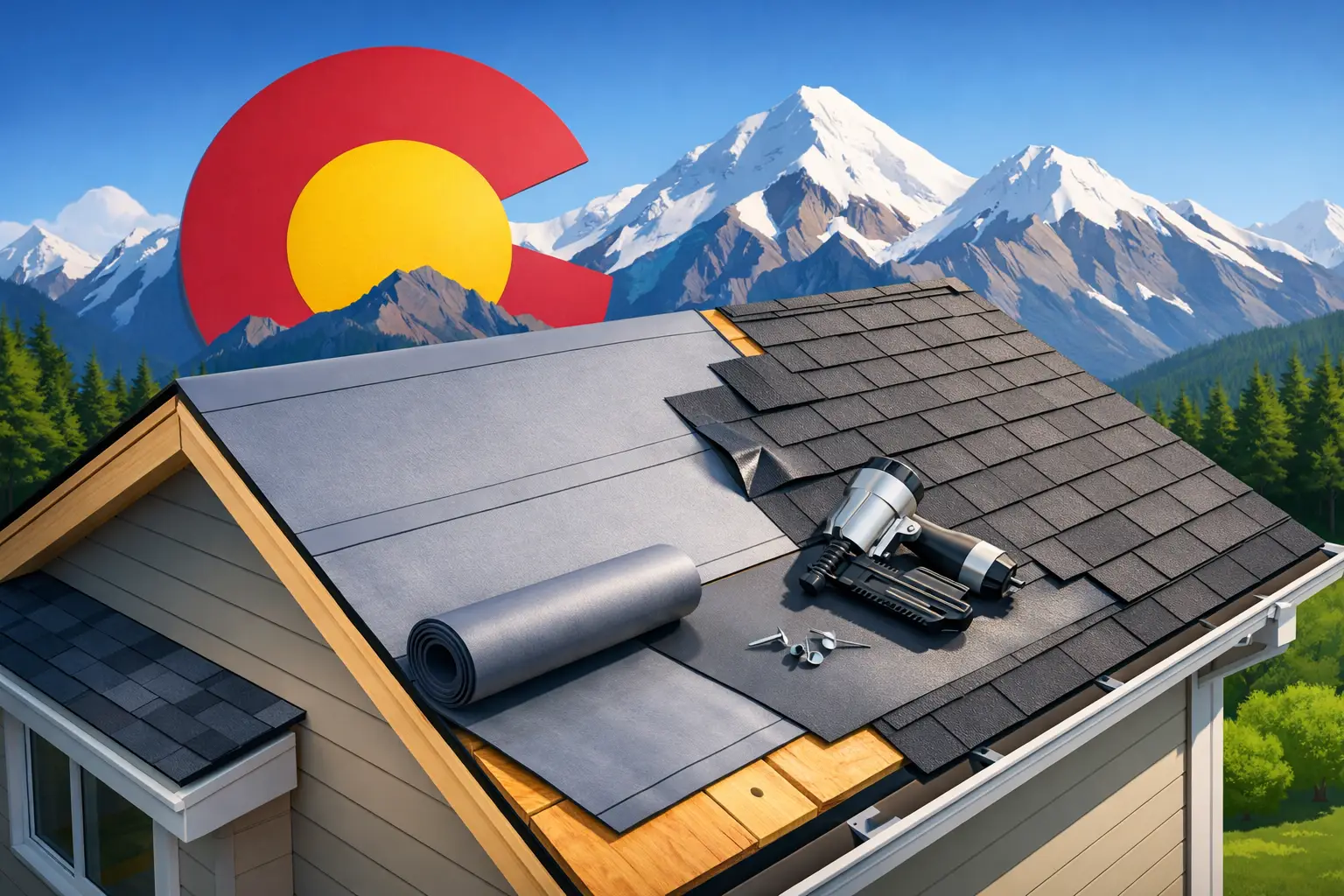
Underlayment covers the roof deck before shingles are installed. Its main job is to provide a water-resistant backup layer if moisture gets past the outer roofing material. Shingles are the first line of defense, but wind, ice, damaged tabs, and aging sealant can create openings over time. A properly installed underlayment helps keep that water from reaching the decking and interior of the home.
Synthetic underlayment is made from engineered polymers rather than traditional asphalt-saturated felt. It is typically lighter, stronger, and more tear-resistant than standard felt products. Most versions come in wide rolls, which can mean fewer seams across the roof and faster installation when conditions are right.
It is not a substitute for shingles, flashing, or an ice-and-water barrier in the areas where one is needed. Think of it as one important part of a complete roofing system, not a standalone fix for a roof with existing leaks or storm damage.
Why Homeowners Choose Synthetic Underlayment
The biggest advantage is durability during installation and exposure. In Fort Collins and surrounding communities, roofing work can involve intense sun, gusty winds, quick weather changes, and cold mornings. Synthetic material generally holds up better than felt when crews are walking on it and when a roof cannot be shingled immediately because of weather.
It is also usually more resistant to tearing. That matters around valleys, hips, ridges, pipe penetrations, and other areas where the roofing crew needs to work carefully around details. A torn or poorly lapped underlayment can become a weak point before the shingles ever go on.
Many synthetic products shed water effectively and have a textured surface for better traction. Better footing does not eliminate fall risks, but it can help crews work more securely on a sloped roof. Because the rolls are lighter and cover more area, installers may also be able to keep the job moving efficiently without sacrificing careful workmanship.
For homeowners, the practical benefit is peace of mind. If a shingle is lifted by wind or damaged by hail, the layer beneath it provides an added measure of protection while repairs are arranged. That is particularly valuable after a storm, when roofing contractors are busy and small issues can take time to identify.
Synthetic Underlayment vs. Felt Paper
Traditional felt paper has been used under shingles for generations. It remains a workable option for some roofing projects, and it can be the right choice when it matches the roofing system, budget, and manufacturer requirements. The decision is not always as simple as calling one material good and the other bad.
Still, synthetic underlayment has clear advantages in strength and moisture resistance. Felt can absorb moisture, wrinkle, and tear more easily when wet. It is also heavier to handle. Synthetic materials generally stay flatter, resist water absorption, and tolerate normal jobsite traffic better.
There are trade-offs. Synthetic products usually cost more than basic felt, although the material increase is often modest compared with the total cost of a roof replacement. Not every synthetic product performs the same way, either. Thickness, UV exposure rating, fastening requirements, approved roof coverings, and warranty terms can vary widely by manufacturer.
The right question is not simply, “Is synthetic better?” It is, “Which underlayment is approved for my roofing material and makes sense for my home?” A dependable contractor should explain that answer plainly before work begins.
Where It Matters Most on a Colorado Roof
Northern Colorado roofs deal with more than ordinary rain. Snow can melt during the day and refreeze at night. High winds can drive moisture beneath shingles. Hail can bruise or crack roofing materials without creating an obvious leak right away. Strong sun at higher elevation adds another source of wear.
Synthetic underlayment can be a strong choice across the main roof field, but certain roof areas require separate attention. Roof edges, valleys, low-slope transitions, skylights, chimneys, and penetrations are common leak locations. These details often call for specialized waterproofing membranes, carefully installed flashing, or both.
An ice-and-water barrier is different from standard synthetic underlayment. It is a self-adhering membrane designed for vulnerable areas where water can back up under shingles, such as eaves and valleys. Depending on the roof design, local requirements, and manufacturer instructions, your contractor may recommend using both products together. That is not unnecessary upselling when the roof layout calls for it. It is how a system is built to manage real weather conditions.
Installation Details That Make the Difference
Even a premium underlayment can fail if it is installed carelessly. The roof deck should be inspected first for soft spots, rot, loose sheathing, or moisture damage. Covering damaged decking with new underlayment only hides a problem that can grow worse.
Once the deck is sound, the material needs to be laid flat, properly overlapped, and fastened according to the manufacturer’s instructions. Fastener type and placement are especially important in windy areas. Too few fasteners can allow material to lift. Fasteners placed incorrectly can create tears or leave sections vulnerable to wind.
Transitions deserve extra care. Underlayment must work with drip edge, flashing, valleys, ventilation components, and pipe boots in the correct sequence. These details are easy to overlook from the ground, but they are where water finds its way in. A quality roof installation is not just rows of straight shingles. It is a series of well-managed connections.
Homeowners should also ask whether the selected underlayment is compatible with the shingle manufacturer’s system and warranty. Manufacturer instructions are not optional paperwork. They provide the installation rules that help protect both the roof and its warranty coverage.
When Synthetic Underlayment May Not Be the Only Answer
If your roof is leaking, synthetic underlayment is not a repair that can be added from the outside without removing roofing materials. The source could be damaged shingles, failed flashing, a cracked vent boot, poor ventilation, or an issue around a chimney or skylight. An inspection should identify the actual cause before anyone recommends a solution.
Likewise, hail damage may require more than replacing a few visible shingles. A professional inspection can check for granule loss, bruising, lifted shingles, damaged flashing, and other signs that affect the roof’s performance. Documentation is especially helpful when an insurance claim may be involved.
For a small repair, replacing a large area of underlayment may not be necessary or practical. For a full roof replacement, it is the right time to evaluate the entire system, including decking, ventilation, flashing, gutters, and the underlayment beneath the new shingles.
Questions to Ask Before a Roof Replacement
Before approving an estimate, ask what underlayment will be used, where it will be installed, and why it suits your roof. You should receive a clear answer, not a vague promise of “high-quality materials.” Ask whether ice-and-water protection is included in valleys and roof edges, how damaged decking is handled, and whether the installation follows the shingle manufacturer’s requirements.
It also helps to ask how the crew protects landscaping, manages debris, and responds if hidden damage is found after tear-off. Honest pricing means understanding what is included and what may change if the roof deck reveals problems that were not visible during the initial inspection.
Rocky Top Total Roofing believes homeowners deserve straightforward answers before work begins. A careful inspection and a written scope of work make it easier to choose materials with confidence instead of guessing based on the lowest price.
A good roof should give you fewer things to worry about when dark clouds move over the Front Range. If you are planning a replacement or have concerns after a storm, schedule an inspection and ask to see how each layer of the roofing system will protect your home.